
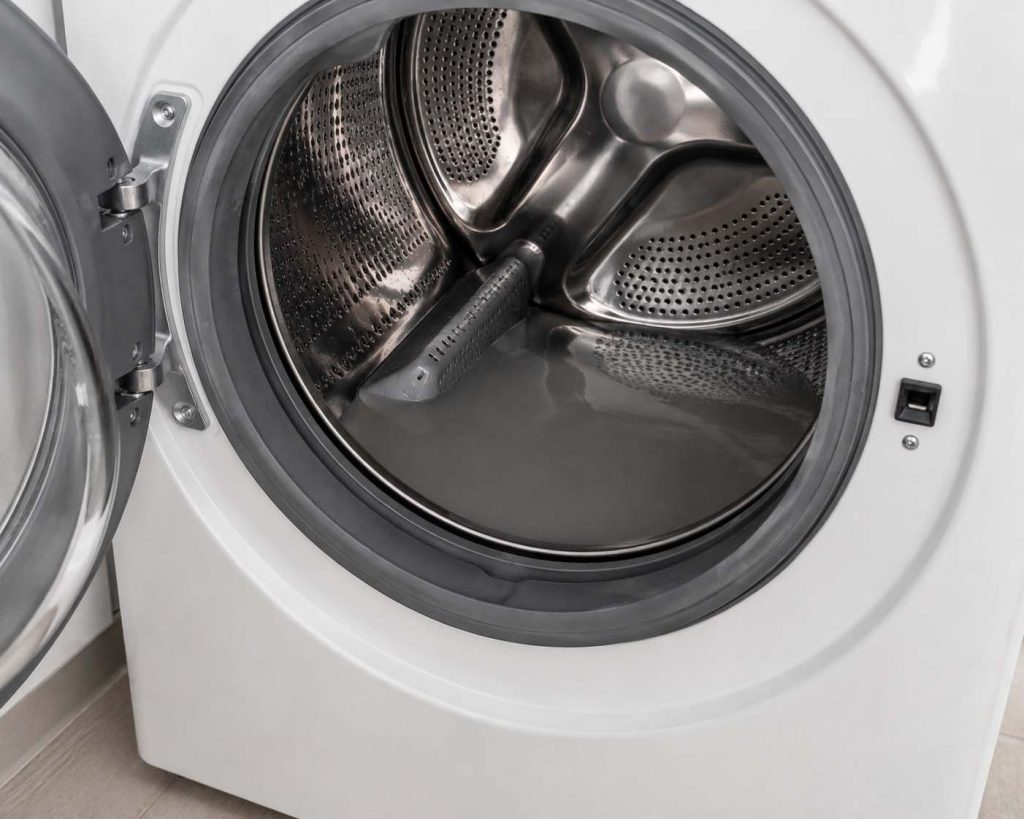
A washer that won’t drain is usually caused by a clogged drain pump filter, a kinked or blocked drain hose, or a small item jamming the pump. Bail out the standing water, unplug the machine, then clean the filter and check the hose. Persistent failures point to a failed drain pump.
Standing water at the end of a wash cycle is one of the most common laundry problems we see. The fix is often simple, and many homeowners handle it in under an hour with a towel and a bucket. This guide from the 5 Star Appliance Repair team walks through the likely causes, the safe checks to try first, and the point where the job belongs to a technician. It applies to most top-load and front-load brands, including Whirlpool, Samsung, LG, GE, Maytag, and Frigidaire.
Is This Your Washer? Common Symptoms
The signs of a drain fault are easy to spot. See if any of these match what your machine is doing:
- Water sits in the drum after the cycle finishes
- The washer stops mid-cycle with a full tub
- Clothes come out soaking wet, not spun
- You hear the pump hum but no water leaves the machine
- A drain error code shows on the display (for example, many Samsung models flag a drain code, and LG models show OE)
Any one of these points to the same short list of causes. Most trace back to a blockage between the drum and your household drain. The next sections show how to find it safely.
Safety First, Then Quick DIY Checks
⚠️ Warning: Unplug the washer or switch off its breaker before you touch the pump, hose, or filter. Turn off the water supply valves behind the machine. Water and electricity together are a shock hazard.
Work through these checks in order. Stop and call a pro if you smell burning or find damaged wiring.
- Cancel the cycle and drain the tub. Select a drain or spin-only cycle first. If water still sits after it runs, scoop it out with a cup and soak the rest with towels.
- Unplug the machine. Pull the plug or trip the breaker before any hands-on step. Slide a shallow pan and towels under the work area.
- Check the drain hose. Pull the washer out gently and look for kinks or sharp bends. Confirm the hose end sits only a few inches into the standpipe, so the machine cannot siphon dirty water back in.
- Clean the drain pump filter. Front-loaders have a small access panel at the lower front. Place a pan below it, twist the filter counter-clockwise, and clear out coins, lint, hair pins, and coin-trap debris.
- Look for a pump blockage. With the filter out, shine a light into the pump housing. Turn the impeller by hand to feel for a sock, coin, or bra wire jamming the blades.
- Test the household drain. Pour water into the standpipe. If it backs up, the clog is in your plumbing, not the washer.
Most drain problems clear at step 4 or 5. Clean the filter every one to three months to keep it from happening again. If the tub still holds water after these checks, the cause is inside the machine.
Likely Internal Causes, Part by Part
When the simple checks do not fix it, the fault is usually one of these parts. Some are DIY-friendly; others need a technician and a multimeter.
- Clogged drain pump filter or coin trap. The number one cause. Lint and small objects build a mat that blocks flow.
- Blocked or kinked drain hose. A hose crushed behind the machine or clogged with sludge stops drainage completely.
- Failed drain pump. A pump that hums but moves no water, or stays silent, has a seized or burned-out motor. This is a replacement part.
- Jammed pump impeller. A coin or wire stuck in the impeller stops the blades from spinning.
- Faulty lid switch or door lock. Many top-load washers will not drain or spin if the lid switch fails. Front-loaders skip the drain if the door lock does not signal “closed.”
- Broken drive belt. On some top-loaders, a snapped belt stops the spin and drain function together.
- Control board or timer fault. A power surge can leave the board unable to trigger the drain step.
Diagnosing a pump, lid switch, or control board means testing electrical parts for continuity. If your machine drains water but will not spin, the problem sits closer to the motor or lid switch than the pump — our guide on why an LG washer won’t spin covers that path. A Samsung dishwasher that won’t drain follows a very similar filter-and-pump logic if that is your issue instead.
When to Call a Pro
Some drain jobs are a homeowner win. Others are a safety or skill line you should not cross. Call a technician when you notice any of these:
- Water returns to the drum every cycle after you cleaned the filter and hose
- The pump hums but no water moves, or the pump is silent
- You smell burning or hot plastic near the motor
- The machine leaks onto the floor during the drain step
- A drain error code returns after a reset
- The lid switch, door lock, or control board is the suspected fault
These point to electrical parts or a failed pump that need proper testing and the correct replacement part. The 5 Star Appliance Repair team carries common drain pumps and hoses on the truck, so most repairs finish in one visit. We serve homeowners across our service areas — from Brea and San Jose to Chicago, Bellevue, and Washington, DC.
Book same-day washer repair: call (855) 731-4952 or request service online.
What Washer Drain Repair Typically Costs
Most drain fixes are on the lower end of washer repair. The figures below are general industry estimates, not quotes — your price depends on brand, part, and labor in your area.
| Repair | Typical range (parts + labor) |
|---|---|
| Clear a clogged filter or hose | $100 – $200 |
| Replace the drain hose | $100 – $200 |
| Replace the drain pump | $150 – $400 |
| Replace a lid switch or door lock | $120 – $250 |
| Diagnose a control board fault | $150 – $400+ |
A diagnostic or service-call fee is standard and is often credited toward the repair when you book the work. For a fuller breakdown by part and brand, see our guide on washing machine repair cost. If your washer is more than 8 years old and the pump and board both need work, repair-versus-replace math is worth a look before you spend.
Frequently Asked Questions
Why is my washer full of water and won’t drain?
Your washer is full of water because something is blocking the drain path or the pump has failed. The most common cause is a clogged drain pump filter or a kinked drain hose. A coin or sock jamming the pump impeller, or a failed drain pump motor, will also leave a full tub. Start by cleaning the filter and checking the hose.
How do I force my washing machine to drain?
To force a washing machine to drain, first run a drain or spin-only cycle from the control panel. If water remains, unplug the machine, place towels and a pan underneath, and open the drain pump filter at the lower front to release the water. On top-loaders, you can also lower the drain hose into a bucket below the tub level to siphon the water out.
Can I fix a washer that won’t drain myself?
Yes, you can often fix a washer that won’t drain yourself when the cause is a clogged filter, a kinked hose, or a small object in the pump. These need only towels, a bucket, and a few minutes. Leave it to a technician if the drain pump, lid switch, door lock, or control board has failed, since those require electrical testing and replacement parts.
Why does my washer drain but not spin?
A washer that drains but won’t spin usually points away from the pump and toward the lid switch, door lock, drive belt, or motor. Front-loaders will skip the spin if the door lock does not confirm the door is shut. Top-loaders often stop spinning when the lid switch or drive belt fails, even though the pump still empties the tub normally.
How much does it cost to fix a washer that won’t drain?
Fixing a washer that won’t drain usually costs between $100 and $400, depending on the failed part. Clearing a clogged filter or hose sits at the low end, while a full drain pump replacement runs higher. A diagnostic fee is standard and is often credited toward the repair. These are general estimates, so ask for a quote before the work begins.
Get Your Washer Draining Again Today
Most washer drain problems come down to a clogged filter, a blocked hose, or a jammed pump — and many are a same-day fix. If the standing water returns after you have cleaned the filter and checked the hose, the pump or an electrical part is the likely cause and needs a technician. Book same-day washer repair with 5 Star Appliance Repair or call (855) 731-4952 to get your laundry back on track. Browse more appliance repair guides or learn about professional washer repair.