
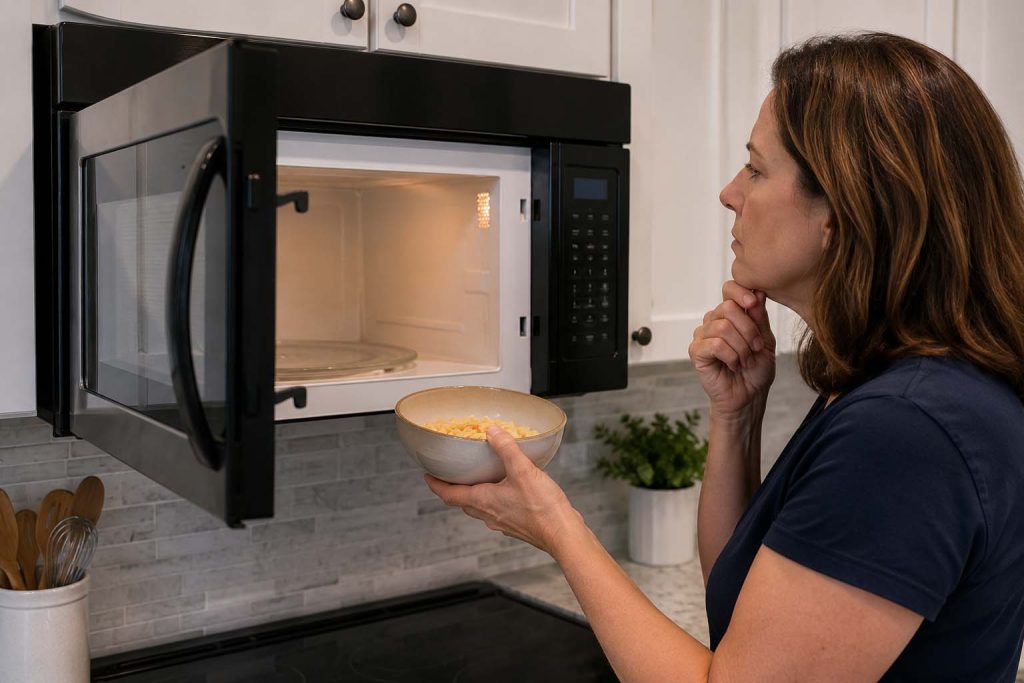
A microwave that runs but does not heat usually has a failed magnetron, a blown high-voltage diode, or a broken door switch. These parts create or control the energy that warms your food. The turntable and light still work because they use separate low-voltage parts. Most repairs involve high voltage, so a technician should test them.
Your microwave lights up, the plate spins, and the timer counts down. Yet your food comes out cold. This is one of the most common microwave faults, and it points to a small number of parts. This guide covers each likely cause and the safe checks you can do. It also shows the clear signs that it is time to call a pro. You will know your next step in a few minutes.
Why Your Microwave Runs but Won’t Heat
A microwave heats food using a part called the magnetron. The magnetron turns household electricity into microwave energy. That energy makes the water in food vibrate, which creates heat.
The turntable, light, and fan run on a separate low-voltage circuit. So they keep working even when the heating side fails. That is why a “dead” microwave and a “runs but no heat” microwave are different problems.
When heating stops, the fault is almost always in the high-voltage circuit. This circuit includes the magnetron, the high-voltage diode, the capacitor, and the transformer. A door switch or a thermal fuse can also cut power to this circuit.
7 Common Causes of a Microwave Not Heating
Most no-heat microwaves trace back to one of the seven parts below. Each entry lists the symptom, the cause, and the fix. Watch for the safety notes on high-voltage parts.
1. Failed Magnetron
Symptom: The microwave runs normally but food stays cold. You may hear a loud hum or buzzing.
Cause: The magnetron has burned out. It is the single most common reason a microwave stops heating, per manufacturer service guides from brands like Whirlpool and KitchenAid.
Fix: A technician tests the magnetron and replaces it. This part carries high voltage, so it is not a safe do-it-yourself job.
2. Blown High-Voltage Diode
Symptom: No heat, and sometimes a loud buzzing or a burning smell during a cycle.
Cause: The high-voltage diode helps send the right voltage to the magnetron. When it shorts or opens, the magnetron cannot fire.
Fix: A technician confirms the diode with a meter and swaps it. A bad diode often fails alongside the magnetron, so both get checked together.
3. Faulty Door Switch (Interlock)
Symptom: The display and turntable work, but heating never starts. The switch may click oddly or not at all.
Cause: A microwave uses interlock switches to confirm the door is shut. If one switch fails, the unit runs but blocks the magnetron for safety.
Fix: Replace the failed switch. If your door also sticks or latches poorly, see our guide on how to fix a stuck microwave door.
4. Tripped Thermal Fuse or Thermoprotector
Symptom: The microwave suddenly stopped heating, often after heavy use or an overheated cycle.
Cause: A thermal fuse cuts power when the unit gets too hot. This protects the microwave, but it also stops all heating until it is replaced.
Fix: A technician finds the tripped fuse, replaces it, and checks why it tripped. A blocked vent or failing fan can cause repeat trips.
5. Bad High-Voltage Capacitor or Transformer
Symptom: No heat, a humming noise, or a faint electrical smell. The unit may trip the breaker.
Cause: The transformer boosts voltage and the capacitor stores it to power the magnetron. Either can fail with age or a power surge.
Fix: These are the most dangerous parts in the microwave. A trained technician must discharge and test them, because the capacitor holds a charge even when unplugged.
6. Wrong Settings or Low Power Level
Symptom: Food heats slowly or barely warms, but the microwave otherwise seems fine.
Cause: The power level is set low, or the unit is stuck in defrost or a demo mode. This is a setting problem, not a broken part.
Fix: Reset the power level to 100 percent and cancel any defrost setting. This is a safe do-it-yourself check you can try first.
7. Control Board or Relay Failure
Symptom: Heating works sometimes, or the microwave behaves in odd, random ways.
Cause: The control board sends power to the heating circuit through relays. A failed relay or board can cut that signal.
Fix: A technician tests the board and relays, then repairs or replaces the faulty part. This diagnosis needs the right tools to avoid guesswork.
Quick Fixes You Can Try Safely
You can rule out simple problems before you book a repair. These checks stay outside the cabinet, so they are safe for any homeowner.
- Check the power level: Set it to high or 100 percent, then run a 30-second test with a cup of water.
- Cancel special modes: Turn off defrost, eco, or demo mode, which can limit heating.
- Test the outlet: Plug another small device into the same outlet to confirm it has power.
- Close the door firmly: Make sure nothing blocks the latch and the door clicks shut.
- Reset the unit: Unplug the microwave for two minutes, then plug it back in.
If the water stays cold after these steps, the fault is inside the high-voltage circuit. That is the point to stop and call a pro. For a unit that will not power on at all, read our post on how to fix a microwave that is not working.
Safety Warning: The High-Voltage Capacitor
A microwave is one of the most dangerous home appliances to open. The high-voltage capacitor can store a charge of several thousand volts. It stays charged even after you unplug the unit and wait.
That stored energy can cause a severe or fatal shock. For this reason, brands like GE and Whirlpool direct no-heat repairs to a qualified technician. You should never remove the outer cabinet to test internal parts yourself.
Stop using the microwave if you notice sparks, a burning smell, or a loud hum. These are signs of a failing high-voltage part that needs prompt attention.
When to Call a Professional
Call a professional when the safe checks above do not restore heat. A no-heat fault almost always sits in the high-voltage circuit, which is not a safe do-it-yourself repair.
A certified technician can test the magnetron, diode, capacitor, and door switches in one visit. This finds the true cause fast and avoids replacing good parts. The 5 Star Appliance Repair team services all major microwave brands, including Samsung, LG, Whirlpool, Frigidaire, and KitchenAid.
Book professional appliance repair to get your microwave tested and fixed safely. You can also request same-day service and describe the symptom so the technician arrives prepared.
Frequently Asked Questions
Why is my microwave running but not heating food?
A failed magnetron is the most common reason a microwave runs but does not heat. The magnetron makes the energy that warms food. A blown high-voltage diode, a broken door switch, or a tripped thermal fuse can also stop heating. The turntable and light still work because they run on separate low-voltage parts.
Is it worth repairing a microwave that is not heating?
Repairing is often worth it for over-the-range or built-in microwaves, which cost much more to replace. A magnetron or diode repair usually costs less than a new built-in unit. For a basic countertop model, replacement can make more sense once the unit is several years old. A technician can confirm the fault before you decide.
Can I fix a microwave that is not heating myself?
You can safely check a few things yourself, such as the power level, the door seal, and whether the outlet works. You should not open the cabinet or test internal parts. The high-voltage capacitor can hold a dangerous charge even when the microwave is unplugged. Leave magnetron, diode, and capacitor work to a certified technician.
What part of a microwave stops it from heating?
The magnetron is the part that stops most microwaves from heating when it fails. It converts electricity into the microwave energy that cooks food. The high-voltage diode and capacitor power the magnetron, so a fault in either also stops heating. A door switch or thermal fuse can cut power to these parts too.
Is a microwave that stopped heating dangerous to use?
A microwave that stopped heating is usually safe to run for a moment, but you should stop using it. A burning smell, sparks, or a loud hum signals a failing part that needs attention. The internal capacitor stays dangerous even after you unplug the unit. Have a technician inspect it before further use.
Get Your Microwave Heating Again
A microwave that runs but will not heat points to a short list of parts, led by the magnetron. You can safely reset the power level, cancel defrost mode, and test the outlet on your own. Beyond that, the high-voltage circuit makes further testing a job for a pro.
Do not risk a shock from the capacitor or waste money on the wrong part. Book a microwave repair with 5 Star Appliance Repair and get an accurate diagnosis the same day. For upkeep tips that prevent future faults, see our microwave maintenance guide.