
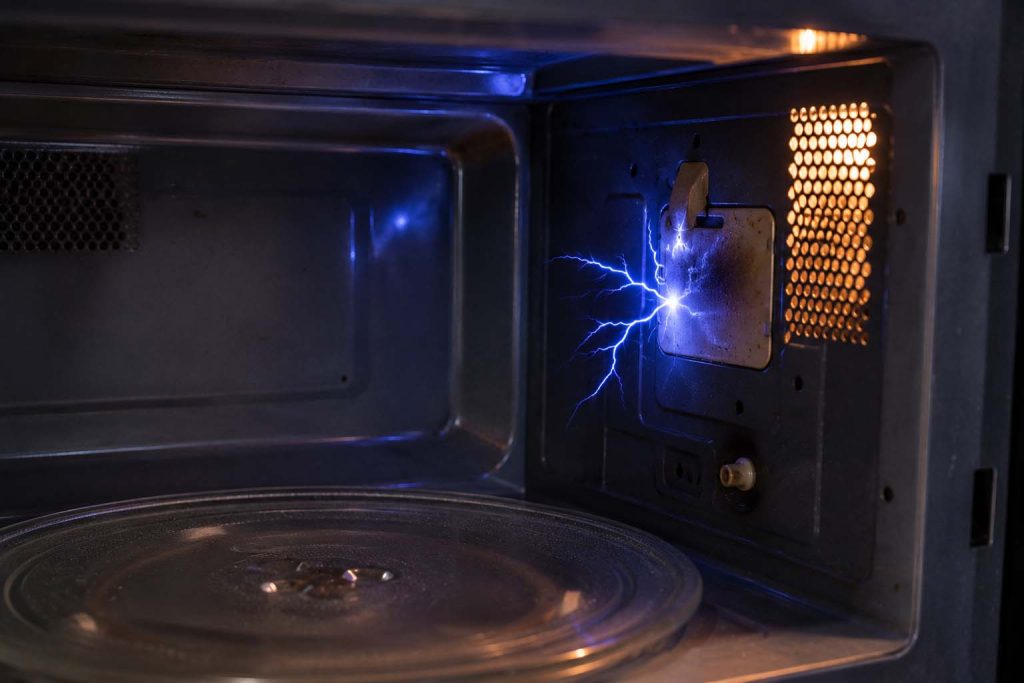
A microwave sparking inside is usually caused by:
- Metal in the oven — foil, twist ties, or dishes with metallic trim.
- A burnt or greasy waveguide cover on the side wall.
- Chipped or worn interior paint exposing bare metal.
- A metal rack or rack support touching the walls.
- A failing high-voltage diode or magnetron (a pro repair).
A microwave that arcs, flashes, or pops is telling you to stop and unplug it. Sparking, also called arcing, is one of the most common microwave faults, and most cases trace back to a short list of causes. Some you can fix in minutes. Others involve high-voltage parts that only a technician should touch. This guide walks through each cause in plain order, shows the safe checks you can do yourself, and marks the exact point where it is time to call a pro.
Is This Your Microwave?
You are in the right place if one or more of these sounds familiar. Match your symptom to narrow the cause.
- You see blue or white flashes, sparks, or small lightning-like arcs inside.
- You hear popping, crackling, or a sharp snapping sound during a cycle.
- There is a burning smell or a scorch mark on the side wall.
- The sparking starts only when a certain plate or container is inside.
- The unit sparks even when it is empty.
Each pattern points to a different cause. Sparks tied to one dish usually mean metal. Sparks with the microwave empty usually mean a part inside the cavity has failed.
⚠️ Safety First — Stop and Unplug
Warning: The moment you see sparks, press stop and open the door. Then unplug the microwave from the wall. Do not run it again to “test” the spark. Arcing can start a fire and can damage the magnetron in seconds.
Never open the cabinet or back panel. A microwave’s high-voltage capacitor can hold a lethal charge even when the unit is unplugged. Internal testing and part replacement are jobs for a trained technician, not a DIY project.
The checks below are all outside-the-cabinet steps. They are safe as long as the microwave stays unplugged while you inspect it.
Quick DIY Checks Before You Call
Work through these in order. Stop at the first one that fixes the sparking.
- Unplug the microwave. Do this before you touch anything inside the cavity.
- Remove all metal. Take out foil, twist ties, metal skewers, and any silverware. Even a small scrap of foil can arc.
- Check your dishware. Plates or mugs with a gold or silver rim, and some travel mugs, contain metal. Swap in a plain microwave-safe dish and see if the sparking stops.
- Inspect the waveguide cover. This is the small rectangular panel on the right or top inside wall, often a light brown mica or a metal-look cover. Look for grease buildup, dark burn marks, or holes.
- Clean a greasy cover gently. Wipe a dirty but intact waveguide cover with a damp cloth and mild soap. Let it dry fully before use. Do not scrub off the surface.
- Look at the cavity walls. Check for chipped paint, rust, or bare metal spots, especially on the floor and back wall.
- Check the rack. If your model has a metal rack, make sure it sits in its supports and does not touch the side walls. Remove it and test without it.
Stop here and call a pro if: the microwave sparks when it is empty and clean, the waveguide cover is burnt through, you see rust or bare metal, or there is a burning smell with no metal inside. Those point to part-level faults.
The Likely Causes Inside Your Microwave
When the quick checks do not solve it, the fault is almost always one of the causes below. Here is what each is and how it fails.
Metal or Foil in the Oven
This is the number-one cause of microwave sparking. Microwave energy reflects off metal, and thin or pointed metal — foil edges, twist ties, fork tines — concentrates that energy until it arcs. The fix is simple: keep metal out. Use only microwave-safe glass, ceramic, or plastic, and avoid dishes with metallic trim.
A Damaged Waveguide Cover
The waveguide cover shields the opening where microwave energy enters the cavity. Grease and food splatter collect on it over time. When that buildup burns, it chars the cover and creates arcing right at that spot. A cover with burn marks or holes needs to be replaced. It is an inexpensive part, but replacement should be matched to your model, so many owners have a technician confirm and fit it.
Chipped Cavity Paint or Rust
The inside of a microwave is painted metal. When the paint chips or rusts through, bare metal is exposed, and that spot arcs like any other metal would. Light surface wear can sometimes be treated with microwave-safe cavity paint, but widespread rust means the unit is near the end of its safe life.
A Metal Rack Touching the Walls
Some microwaves include a metal shelf rack. If it is not seated in its plastic supports, or if a support has broken, the rack can touch a wall and arc. Reseat the rack correctly, or run the unit without it, and the sparking should stop.
A Failing Diode or Magnetron
The high-voltage diode and the magnetron create and route the energy that heats your food. When either begins to fail, it can arc inside the cavity, often with a loud buzz or a burning smell, even when the microwave is empty and clean. These are sealed high-voltage parts. Testing and replacement are technician-only work.
When to Call a Pro
Some sparking is a five-minute fix. Some is a safety hazard. Call a professional when:
- The microwave sparks while empty and clean.
- The waveguide cover is charred, cracked, or has holes.
- You see rust or bare metal inside the cavity.
- There is a burning smell, smoke, or a scorch mark on a wall.
- The sparking comes with a loud buzz, which points to the diode or magnetron.
The 5 Star Appliance Repair team services microwaves from the major brands — Samsung, LG, Whirlpool, Frigidaire, KitchenAid, and Bosch — including built-in and over-the-range units. A technician can safely discharge the capacitor, test the high-voltage parts, and fit the correct replacement. Never attempt those steps yourself.
Microwave Sparking Repair Cost (General Estimates)
The figures below are general estimates to set expectations, not quotes. Your real price depends on a diagnosis of your specific unit, its brand, and whether it is a countertop, over-the-range, or built-in model.
| Repair | Typical all-in range (part + labor) | Notes |
|---|---|---|
| Diagnostic / service-call fee | $75–$130 (general estimate) | Often credited toward the repair when you approve the work |
| Waveguide cover replacement | $100–$200 (general estimate) | Inexpensive part; quick fit once the model is confirmed |
| Cavity repaint (light chip/rust) | $90–$180 (general estimate) | Only viable for minor, isolated wear |
| High-voltage diode replacement | $100–$220 (general estimate) | Often checked alongside the magnetron |
| Magnetron replacement | $150–$300+ (general estimate) | The priciest common microwave repair |
Repair vs. replace: A countertop microwave often costs less to replace than to repair once the magnetron fails, since a new unit can run under $150. An over-the-range or built-in model is usually worth repairing, because a like-for-like replacement is far more expensive and involves installation. A quick, honest diagnosis tells you which path makes sense for your unit.
Book a Repair With 5 Star Appliance Repair
If your microwave keeps sparking after you have removed all metal and cleaned the cavity, the safe next step is a professional diagnosis. Do not keep running a unit that arcs.
5 Star Appliance Repair offers same-day service across its service areas — Brea, San Jose, Chicago, Bellevue, Mercer Island, and Washington DC. Certified technicians handle the high-voltage work safely and fit the right parts the first time.
Book same-day service → or contact your local 5 Star team → to get your microwave diagnosed and back to safe use.
Frequently Asked Questions
Is it safe to use a microwave that sparks?
No. Stop the cycle, open the door, and unplug the unit as soon as you see sparks. Arcing can start a fire and can burn out the magnetron within seconds. Running it again to test the spark only risks more damage. Remove any metal, then have the microwave inspected before you use it again.
Why is my microwave sparking with nothing in it?
Sparking with the microwave empty points to a part inside the cavity, not to your food. The most common causes are a burnt waveguide cover, chipped paint or rust on the walls, or a metal rack touching a side wall. A failing high-voltage diode or magnetron can also arc when empty. These faults need a technician to diagnose safely.
Can a dirty microwave cause sparking?
Grease and food buildup on the waveguide cover is a leading cause of sparking. When that residue burns, it chars the cover and creates arcing at that spot. Wiping an intact cover with a damp cloth and mild soap often solves it. If the cover is burnt through or has holes, it needs to be replaced rather than cleaned.
What is the waveguide cover, and can I replace it myself?
The waveguide cover is the small panel on the inside wall that shields where microwave energy enters the cavity. Cleaning a greasy but intact cover is a safe DIY task. Replacing a burnt cover should be matched to your exact model, and because it sits close to high-voltage parts, many owners have a technician confirm and fit the correct one.
Is a sparking microwave worth repairing?
It depends on the unit. A countertop microwave often costs less to replace than to repair once the magnetron fails. An over-the-range or built-in model is usually worth repairing, since a replacement is far more expensive and involves installation. A quick professional diagnosis tells you the cause and whether repair or replacement is the better value.