
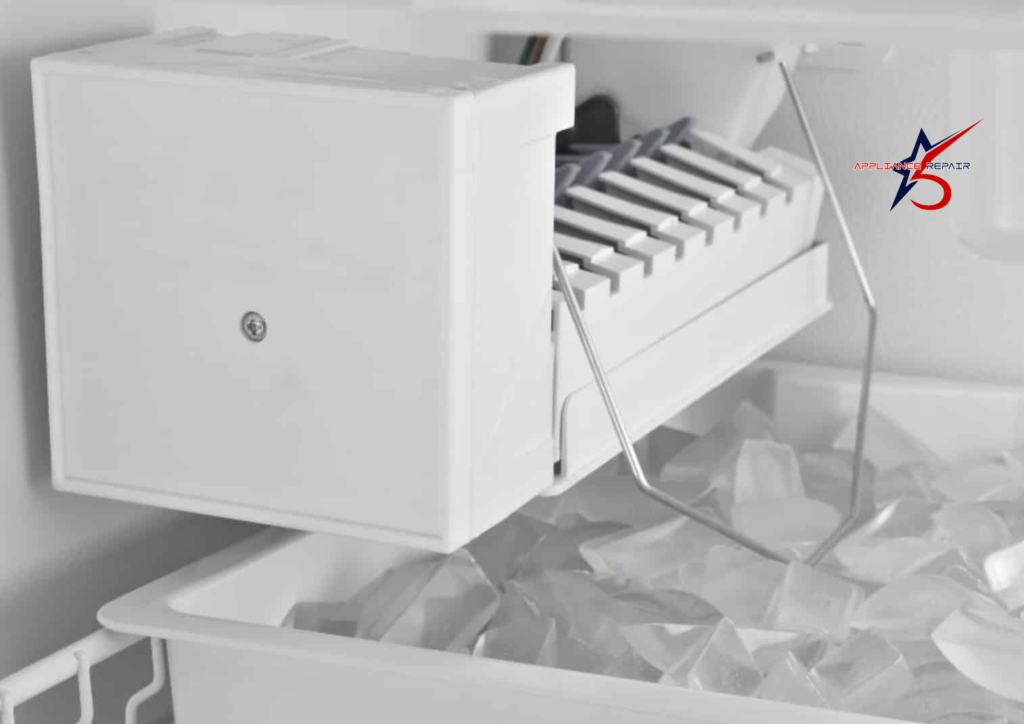
Few things are more frustrating than reaching for ice and finding an empty bin. If your ice maker has stopped producing ice — or is making significantly less than usual — you’re not alone. This is one of the most common appliance complaints homeowners deal with, and in most cases, the fix is something you can handle yourself without calling a repair technician.
Before you assume the worst, work through these 8 common causes. Chances are, one of them is your problem — and the solution is simpler than you think.
1. The Ice Maker Is Turned Off
Your ice maker needs a constant supply of water to function. If the water supply line running to your refrigerator is kinked, pinched, or has its shut-off valve closed, no water will reach the ice maker — and no water means no ice.
The fix: Pull your refrigerator away from the wall and inspect the water supply line running from the wall valve to the back of the fridge. Look for any kinks or bends and straighten them out. Also confirm the shut-off valve on the wall is fully open. While you’re back there, check that the line isn’t frozen solid — a frozen supply line is a common issue in older refrigerators.
3. Clogged or Frozen Water Filter
Most modern refrigerators use an inline water filter to clean the water going to both the dispenser and the ice maker. Over time, these filters get clogged with sediment and mineral buildup — and a clogged filter restricts water flow enough to stop ice production entirely.
The fix: Check when you last replaced your water filter. The general recommendation is every 6 months. If it’s been longer than that, replace it. Filters are model-specific, so check your refrigerator’s manual or look up your model number online to find the correct replacement. After installing the new filter, run a few gallons of water through the dispenser to flush the system before expecting ice.
4. Freezer Temperature Is Too Warm
Ice makers are designed to operate within a specific temperature range. If your freezer is too warm, the ice maker simply won’t produce ice — or it will produce small, malformed cubes that melt quickly.
The fix: Check your freezer temperature. The ideal range for ice production is between 0°F and 5°F (-18°C to -15°C). If it’s reading warmer than that, adjust the thermostat and give the freezer 24 hours to stabilize. Also check that the freezer vents aren’t blocked by food items — poor airflow is a common cause of warm freezer temperatures.
5. The Water Inlet Valve Is Faulty or Clogged
The water inlet valve is the component that opens to let water into the ice maker when a new cycle begins. If this valve is clogged with mineral deposits or has failed electrically, water won’t enter the ice maker no matter what.
The fix: First, check your home’s water pressure — the inlet valve requires at least 20 psi to operate properly. Low water pressure is often the culprit. If pressure is fine, the valve itself may need to be cleaned or replaced. The inlet valve is typically located at the back of the refrigerator where the water line connects. Replacing it is a manageable DIY job — valves usually cost between $20 and $50 and require only a screwdriver and wrench to swap out.
6. The Ice Maker Is Jammed
Sometimes ice cubes clump together and create a jam inside the ice maker mechanism or the bin below it. When this happens, the ice maker senses the bin is full (because it can’t cycle) and stops producing.
The fix: Remove the ice bin completely and look for any large clumps or a single cube that has wedged itself in the ejector arm or chute. Break up any clumps by hand and clear the jam. Once cleared, replace the bin and allow 1–2 hours for the cycle to resume. To prevent future jams, use your ice regularly and avoid letting it sit for weeks at a time — old ice tends to fuse together in clumps.
7. The Door Gasket Is Leaking Warm Air
A worn or damaged freezer door gasket allows warm, humid air to seep into the freezer. That moisture freezes on contact with cold surfaces, including the ice maker’s components — and over time, it can cause frost buildup that blocks the ice maker or freezes the water fill tube solid.
The fix: Run your hand slowly around the entire edge of the freezer door while it’s closed and feel for any air escaping. You can also do the dollar bill test — close the door on a dollar bill and try to pull it out. If it slides out easily, the seal isn’t tight enough. Replacement gaskets are model-specific and can be ordered online for $20 to $60. Most snap or press into place without special tools.
8. The Ice Maker Module Itself Has Failed
If you’ve worked through all of the above and still have no ice, the ice maker module — the mechanical and electrical unit that controls the entire cycle — may have failed. This can happen due to age, a power surge, or a motor burnout inside the unit.
The fix: Before replacing the whole refrigerator, try replacing just the ice maker module. For most refrigerators, the entire ice maker assembly can be replaced as a single unit. Search your refrigerator’s model number along with “ice maker assembly” to find the correct part. Depending on the brand, replacement units typically run $30 to $150 and can be installed in 20–30 minutes by removing a few screws and reconnecting a wiring harness.
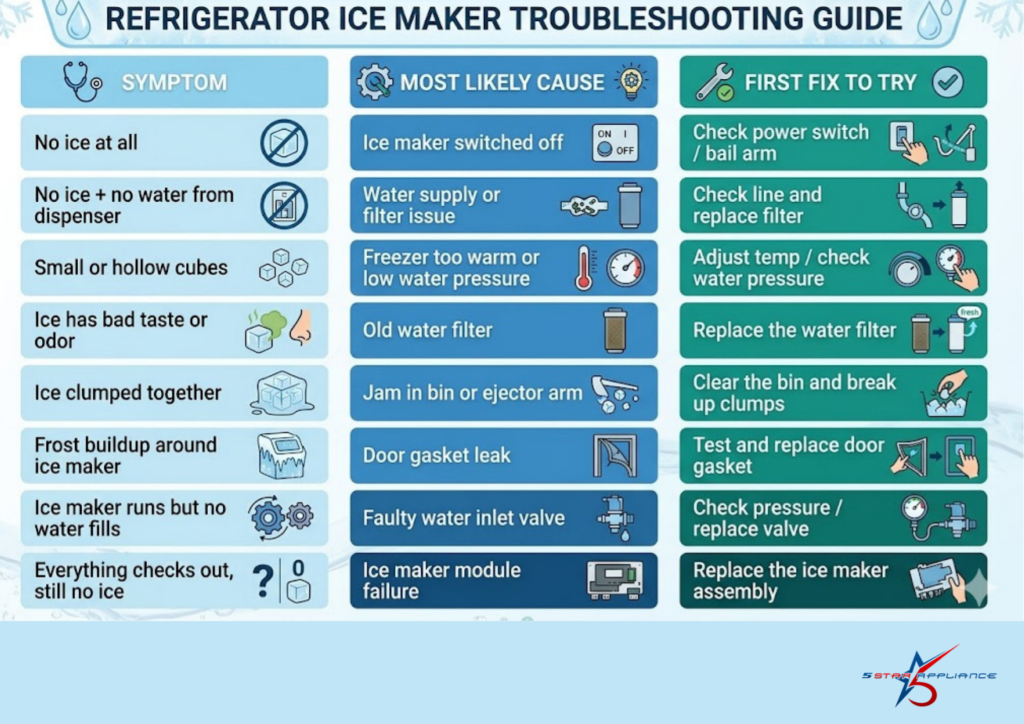
Quick Diagnosis Chart
How Long Does It Take for an Ice Maker to Start Working After a Fix?
Once you’ve addressed the issue, patience is key. Here’s what to expect:
- After turning it back on: 24 hours for the first full bin
- After replacing the water filter: 1–2 hours for initial cubes
- After adjusting freezer temperature: 24 hours to stabilize
- After clearing a jam: 1–2 hours to resume cycling
- After replacing the inlet valve or module: 2–4 hours
When to Call a Professional
Most ice maker issues fall within DIY range, but consider calling a certified appliance technician if:
- You’ve replaced the module and still have no ice production
- Your refrigerator is showing error codes you can’t diagnose
- There is water leaking inside or underneath the refrigerator
- The compressor is running constantly or making loud noises
- Your refrigerator is under warranty — DIY repairs may void it
Conclusion
An ice maker that stops working is rarely a death sentence for your refrigerator. In the vast majority of cases, the problem comes down to something simple — a flipped switch, a clogged filter, a frozen line, or a minor jam — that you can diagnose and fix yourself in under an hour.
Work through the 8 fixes in this guide from top to bottom, and you’ll almost certainly find your answer before you ever need to pick up the phone and call a repair tech. Stay cool!