
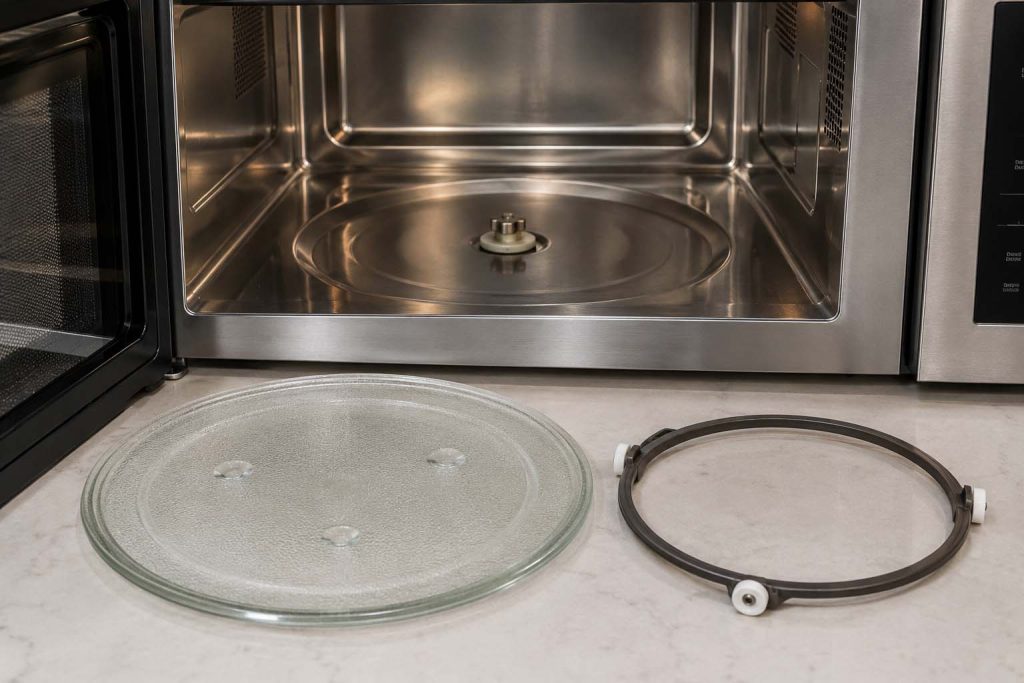
A microwave turntable usually stops turning because of a worn drive motor, a cracked coupler, or a support ring that has slipped off its track. The microwave still heats food, but unevenly, so cold spots are common. Replacing the motor or coupler is typically an $80 to $150 repair, based on national averages from Angi.
Your microwave hums, the light comes on, and the timer counts down, but the glass plate under your food stays still. That single symptom points to a short list of parts, not a dead appliance. This guide walks through each cause, the safe checks you can run yourself, and when the job needs a licensed technician.
5 Star Appliance Repair is a multi-brand appliance repair company serving homeowners across the United States. Technicians service microwaves and other kitchen appliances from Samsung, LG, Whirlpool, Frigidaire, KitchenAid, and Bosch. If your microwave needs more than a quick fix, our appliance repair team can usually get to it the same day.
How a Microwave Turntable Works
A small motor under the microwave floor turns a support hub. The hub connects to the glass tray through a plastic coupler, and the tray rides on a plastic roller ring. When any one of those three parts fails, the tray stops spinning even though the microwave keeps running.
None of these parts touch the high-voltage side of the microwave that generates heat. A stuck turntable and a “cold” microwave are two separate problems with two separate causes. They just happen to feel similar the first time you notice something is wrong.
If your unit runs but never warms food, that is a different fault — see our guide to a microwave not heating instead.
Rotation exists so radio waves reach every side of your food instead of just the center. Per DIY guides from RepairClinic, five parts cause almost every turntable failure: the motor, coupler, roller ring, support hub, and control board. Knowing which one failed narrows the fix before you call anyone.
5 Common Causes of a Microwave Turntable Not Turning
Most no-spin complaints trace back to one of five parts. Check them in this order, since the first two cause the large majority of cases.
1. Worn or Failed Drive Motor
The motor is a small, low-voltage part that turns slowly and quietly. When it wears out, the tray sits still and you may hear a faint hum with no movement. This part is inexpensive, but reaching it means removing the microwave’s bottom panel.
2. Cracked or Worn Coupler
The coupler is a plastic piece that fits over the motor shaft in a D-shaped notch. Heat and age make it brittle, and it can crack or strip so the motor spins without turning the tray. This is one of the most common failure points parts suppliers report.
3. Damaged Roller Guide or Support Ring
The roller ring sits under the glass tray and lets it glide smoothly. A cracked roller, a missing wheel, or debris trapped in the track can stop the tray from riding freely, even with a healthy motor.
4. Turntable Misaligned or Blocked
Sometimes the fix has nothing to do with a broken part. The tray may be seated wrong on the hub, sitting backward, or blocked by a container that is too wide for the cavity. Reseating the tray solves this in seconds, and it is worth trying before you assume a part has failed.
5. Faulty Control Board or Door Switch
Less often, a failed door interlock switch cuts power to the turntable circuit, or a fault on the main control board does the same thing. Either way, the rest of the microwave keeps working, so this cause needs a meter to confirm and is usually a technician’s diagnosis.
A door that sticks or will not latch can trigger the same switch fault. Check our guide to a stuck microwave door if that sounds familiar.
Is It Safe to Use a Microwave With a Broken Turntable?
Yes, a microwave with a broken turntable still heats food safely. The magnetron and control circuits that create heat are separate from the small motor that spins the tray. A stalled turntable is not a fire or shock risk on its own.
What changes is how evenly your food cooks. Without rotation, the outer edges of a dish absorb more energy than the center, per Whirlpool’s own troubleshooting guidance. That is why food can come out hot on one side and cold on the other.
Stirring food halfway through, or manually turning the dish, closes most of that gap until the part is fixed.
DIY Checks vs. When to Call a Pro
Start with the checks that need no tools. They fix a real share of “broken” turntables in minutes.
- Confirm the glass tray sits flat on the support hub, front-side up, and is not backward.
- Remove the tray and roller ring, wipe out any crumbs or spilled food, and reseat both pieces.
- Check that a wide dish or container is not wedging against the cavity wall.
- Look for a “rotation on/off” setting on the control panel, since some models let you disable it.
If the tray still will not turn after those checks, stop there. Interlock switches, the control board, and any part behind the outer panel sit close to a high-voltage capacitor. That capacitor can hold a dangerous charge even when the microwave is unplugged, so this work belongs to a trained technician, not a weekend repair.
The same rule applies if your microwave will not power on at all. See our guide on a microwave that is not working, or book a visit through our appliance repair services page.
Repair or Replace: What Makes Sense for a Microwave
Microwaves fall into the same repair-or-replace math as washers, dryers, dishwashers, and range hoods, regardless of brand. If the repair cost runs under roughly half of what a new, similar unit costs, repair is usually the better value. That math favors repair even more for a unit under 6 to 8 years old.
A turntable motor or coupler swap typically costs $80 to $150, based on national averages from Angi. That is well under half the price of most new microwaves. A magnetron or control board repair runs higher.
Ask for a written, itemized quote before any work starts. A real number beats a guess when you compare repair against replacement.
Why Homeowners Trust 5 Star Appliance Repair for Microwave Fixes
5 Star Appliance Repair charges a standard service-call fee only when no repair is completed, and the fee is waived once you approve the work. The diagnostic visit itself does not add extra cost on top of the repair. You also get a written quote before the technician starts.
Technicians work on microwaves and other kitchen appliances from mass-market brands like Samsung, LG, Whirlpool, Frigidaire, KitchenAid, and Bosch. Same-day appointments are available in most service areas. Customers also point to the company’s long-standing local reputation and thousands of verified reviews when choosing who to call.
Frequently Asked Questions
Can I still use my microwave if the turntable will not turn?
Yes, you can still use a microwave with a stalled turntable, since the heating function does not depend on it. Food will heat unevenly, with possible cold spots near the center of the dish. Stirring or rotating food by hand halfway through the cycle helps close that gap until the part is repaired.
Why does my microwave hum but the turntable will not spin?
A humming sound with no rotation usually points to a worn drive motor or a cracked coupler between the motor and the tray. The motor is trying to turn but cannot transfer that motion to the glass plate. A technician can confirm which part failed with a quick continuity check.
Can I replace a microwave turntable motor myself?
You can replace some couplers or roller rings yourself, since those sit under the tray with no tools required. A motor swap means opening the microwave’s outer panel, which sits near high-voltage parts that can hold a charge after unplugging. Most manufacturers and repair guides recommend a licensed technician for that step.
How much does it cost to repair a microwave turntable?
A microwave turntable motor or coupler repair typically costs $80 to $150 for parts and labor, according to national cost data from Angi. Simpler fixes, like reseating the tray or clearing out debris, cost nothing beyond the standard service-call visit. Actual pricing always depends on the model and the technician’s written, itemized quote.
Why does my microwave turntable turn but make a grinding noise?
A grinding or scraping noise during rotation usually means a cracked roller wheel or a damaged support ring. Debris trapped in the track under the tray causes the same noise. The motor and coupler are still working in this case, since the tray does rotate, and cleaning the roller ring solves most grinding complaints.
Get Your Microwave Turntable Fixed
A microwave turntable that will not turn almost always comes down to the drive motor, the coupler, or the roller ring underneath the tray. Most of those repairs cost far less than a replacement microwave. Reseating the tray and clearing debris solves some cases in minutes, while a worn motor or coupler needs a technician.
If the checks above did not fix it, schedule a microwave repair visit with 5 Star Appliance Repair. A technician can diagnose the exact part, give you a written quote, and complete most turntable repairs in a single visit. For more upkeep tips, browse our microwave maintenance guide or the full appliance repair blog.