

Regularly clean the coils, maintain proper temperature settings, and avoid overloading to extend refrigerator lifespan. Check door seals and defrost when needed for optimal performance and energy efficiency.
Key Takeaways:
- Clean condenser coils regularly
- Maintain correct temperature
- Avoid overloading the fridge
- Check and replace door seals
- Defrost when necessary
A refrigerator is one of the most vital appliances in any home, working around the clock to keep your food fresh and safe. However, without proper maintenance and care, even the best models can start losing efficiency over time. To help you get the most out of your investment, we’ve compiled the most effective and proven ways to extend your refrigerator’s lifespan. By following these expert tips, you can keep your appliance running smoothly for years while reducing energy costs and preventing expensive repairs.
Table of Contents
1. Keep Your Refrigerator Clean Inside and Out
Regular cleaning is one of the simplest yet most effective ways to prolong your refrigerator’s life. Dirt, grime, and food residue can cause odor buildup and even clog essential components.
- Interior cleaning: Remove all food items and shelves at least once every three months. Use a mixture of baking soda and warm water to wipe down the walls, drawers, and gaskets. Avoid using harsh chemicals that can damage the interior lining.
- Exterior cleaning: Dust and debris often accumulate on the back and bottom areas, especially near the condenser coils. Vacuum these areas every six months to improve airflow and prevent overheating.
Keeping the interior organized and clean also allows cold air to circulate efficiently, helping your refrigerator maintain a stable temperature.

2. Maintain Optimal Temperature Settings
Setting your refrigerator and freezer to the right temperatures ensures efficiency and preserves food quality. The ideal temperature for a refrigerator is between 37°F and 40°F, while the freezer should be set at 0°F.
Extreme temperature fluctuations force your refrigerator’s compressor to work harder, leading to premature wear and tear. Use a thermometer to monitor temperature consistency and adjust settings as needed, especially during seasonal changes or when loading new groceries.
For official guidance on safe refrigerator and freezer temperatures, refer to the USDA’s refrigeration safety page.
3. Check and Clean the Condenser Coils Regularly
The condenser coils play a crucial role in removing heat from your refrigerator. When these coils become clogged with dust or pet hair, the appliance must use more energy to maintain the desired temperature.
- Unplug your refrigerator before cleaning.
- Use a coil brush or vacuum to remove dirt buildup.
- Clean coils every six months to one year, depending on your home environment.
By keeping the coils free of debris, you can reduce energy consumption by up to 30% and significantly extend the unit’s lifespan.
The U.S. Department of Energy provides additional tips on keeping your refrigerator efficient and energy-saving.
4. Inspect and Maintain the Door Seals
A faulty or loose door gasket can cause cool air to leak, making your refrigerator work overtime. To test your door seals, close a dollar bill in the door—if it slips out easily, the seal needs replacement.
- Clean the gasket monthly using warm soapy water to remove sticky residue.
- Avoid petroleum-based cleaners that can weaken the rubber.
- Replace damaged or worn seals immediately to maintain efficiency.
Maintaining tight door seals helps your refrigerator retain cold air, reduces compressor strain, and saves on electricity bills.
5. Avoid Overloading or Underloading
Proper load balance is key to optimal cooling performance. An overloaded refrigerator blocks airflow, while an underloaded one forces the compressor to cycle more frequently. Both conditions can strain the system and lead to uneven cooling, higher energy consumption, or premature wear on components.
To maintain efficiency, keep your refrigerator about two-thirds full. This level allows cold air to circulate freely, ensuring every shelf stays evenly cooled. Organize food strategically by keeping heavier items at the bottom and avoiding obstruction of vents to promote consistent airflow.
6. Defrost Your Freezer When Needed
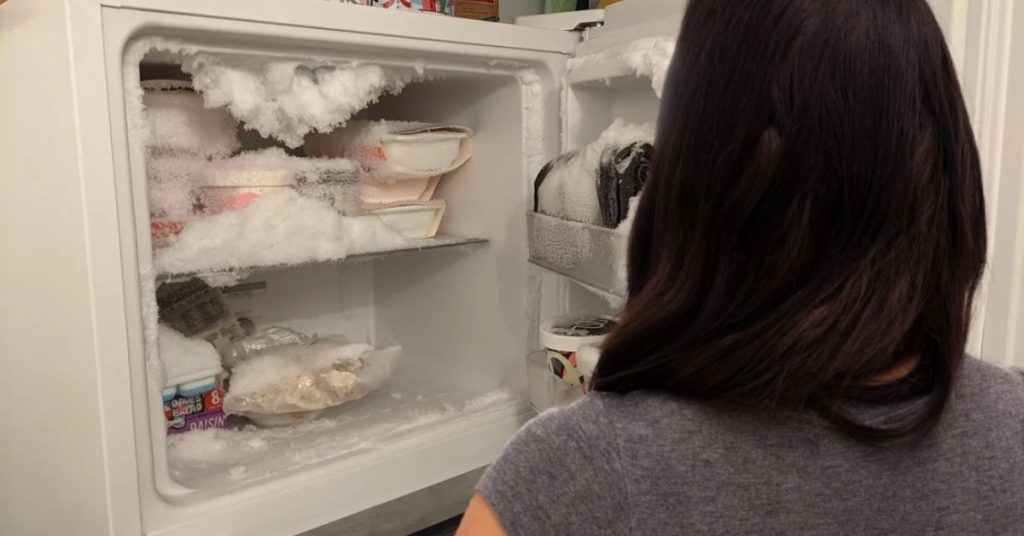
While many modern refrigerators have auto-defrost systems, older models may still require manual defrosting. Over time, excessive frost buildup can block airflow, forcing the appliance to work harder and consume more energy. This buildup also reduces storage space and affects the freezer’s ability to maintain a stable temperature.
When the frost layer reaches a quarter-inch thickness, it’s time to defrost. Unplug the unit and allow the ice to melt naturally. Avoid using sharp tools to chip away frost, as this can damage coils or sensors. Regular defrosting helps maintain performance and prevents freezer burn on stored food.
7. Ensure Proper Ventilation Around the Appliance
Refrigerators need adequate space to release heat and maintain efficient operation. When placed too close to walls or cabinets, trapped heat forces the compressor to work harder, leading to higher energy consumption and potential overheating. Proper ventilation ensures the appliance can dissipate heat effectively and maintain a consistent internal temperature.
Leave at least two inches of clearance on all sides to promote airflow around the unit. Keep the back area free from dust and obstructions, and avoid positioning the refrigerator near ovens, dishwashers, or direct sunlight to prevent premature wear and reduced efficiency.
8. Keep the Drip Pan and Drain Hole Clean
Every refrigerator has a drip pan and drain hole that collects condensation. Over time, these components can become clogged with food debris or mold, leading to leaks or foul odors.
- Locate the drain hole and gently clear it using a small brush or pipe cleaner.
- Clean the drip pan with a mild detergent and water.
- Repeat this maintenance task every few months to prevent blockages.
Keeping the drainage system clean helps your refrigerator run smoothly and prevents unwanted moisture buildup.
9. Replace the Water Filter on Schedule
If your refrigerator includes a built-in water or ice dispenser, the water filter plays a vital role in maintaining water quality and appliance health. A clogged filter can reduce water flow and put extra pressure on the system.
- Replace the filter every six months, or as recommended by the manufacturer.
- Always use genuine or compatible filters to avoid performance issues.
This small step can significantly extend the lifespan of your refrigerator’s water system while ensuring clean, fresh water and ice.
10. Schedule Regular Professional Maintenance
Understanding the importance of regular appliance maintenance helps homeowners avoid costly repairs and unexpected breakdowns. Having your refrigerator checked by certified appliance repair technicians ensures that small problems—like refrigerant leaks or compressor issues—are detected early and resolved efficiently.
At 5 Star Appliance Repair, experts provide thorough inspections and professional servicing to keep your fridge running smoothly and efficiently. Routine appliance maintenance not only extends its lifespan but also improves energy efficiency and performance. Keep your kitchen worry-free—book now for trusted appliance service care.
11. Protect Your Refrigerator from Power Surges
Electrical fluctuations or power surges can cause severe damage to your refrigerator’s compressor or control board. These sudden voltage spikes often occur during storms, power outages, or when large appliances switch on and off. Without proper protection, these surges can shorten the lifespan of key components and lead to expensive repairs.
Installing a surge protector designed for heavy appliances is a simple yet effective solution. It acts as a barrier, preventing excess voltage from reaching sensitive parts of your refrigerator. This small investment ensures long-term performance and protects your appliance from unexpected electrical damage.
12. Keep the Interior Organized for Efficient Airflow
A well-organized refrigerator not only helps you find items faster but also enhances cooling efficiency. When food is cluttered or blocking air vents, cold air cannot circulate evenly, causing temperature fluctuations and forcing the compressor to work harder. Proper organization keeps energy use low and maintains consistent freshness for all stored items.
Use clear bins and labels to group similar foods together, making it easy to locate ingredients and prevent overstocking. Keep air vents unobstructed, place frequently used items in accessible areas, and store heavier items at the bottom for optimal airflow.
Conclusion: Keep Your Refrigerator Running for Years to Come
A refrigerator’s longevity depends on consistent care, cleaning, and maintenance. By following these proven strategies, you can extend your refrigerator’s lifespan, reduce energy waste, and avoid costly repairs. Whether it’s cleaning condenser coils, maintaining ideal temperatures, or scheduling professional inspections, each step plays a vital role in keeping your appliance efficient and reliable.
For expert help, trust 5 Star Appliance Repair, your local leader in appliance maintenance and repair services. From stove repair and dishwasher maintenance to refrigerator tune-ups, we offer service available locally to keep your kitchen running smoothly.
Contact us today to schedule your next appliance service and ensure lasting performance.
FAQs
How often should I clean my refrigerator’s condenser coils?
Condenser coils should be cleaned every six months to one year, depending on your home environment. Regular cleaning prevents dust buildup, reduces energy consumption, and extends the appliance’s lifespan.
What is the ideal temperature for my refrigerator and freezer?
The refrigerator should be set between 37°F and 40°F, while the freezer should stay at 0°F. Maintaining these temperatures ensures food safety and prevents excessive wear on the compressor.
How can I tell if my refrigerator door seals need replacing?
Test the seal by closing a dollar bill in the door—if it slips out easily, the gasket needs replacement. Tight seals prevent cool air from escaping, improving efficiency and reducing energy costs.
How often should I defrost my freezer?
Defrost your freezer when frost reaches about a quarter-inch thick, especially in older or manual-defrost models. Regular defrosting prevents airflow blockage, energy waste, and freezer burn on stored food.
Can overloading my refrigerator affect its lifespan?
Yes, overloading blocks airflow, forcing the compressor to work harder and causing uneven cooling. Keeping your fridge about two-thirds full ensures proper circulation and reduces wear on components.