
You press start and nothing happens. No hum, no light, no heat — your microwave is completely dead. Before you rush out to buy a new one or call an appliance repair service, there are a few common causes you can check yourself that may save you time and money.
In this guide, we will walk you through the top 4 most probable causes of a microwave that is not working, how to identify each one, and what you can do about it. We will also cover important safety warnings you need to know before touching anything inside your microwave.
IMPORTANT Safety Warning — Read Before You Start
Microwave ovens use extremely high voltage and current internally — even when unplugged. The high voltage capacitor inside a microwave can retain a dangerous electrical charge long after the unit has been unplugged, and contact with it can cause serious injury or death.
Before attempting any inspection or repair:
- Always unplug the microwave from the wall before doing anything.
- Never touch internal components unless you are an experienced technician.
- Testing and replacing internal components such as the capacitor, magnetron, or control board should always be done by a qualified appliance repair professional.
The troubleshooting steps below will help you identify the likely cause. However, for any repair that involves opening the microwave casing, we strongly recommend booking a professional appliance repair service.
What You Will Need
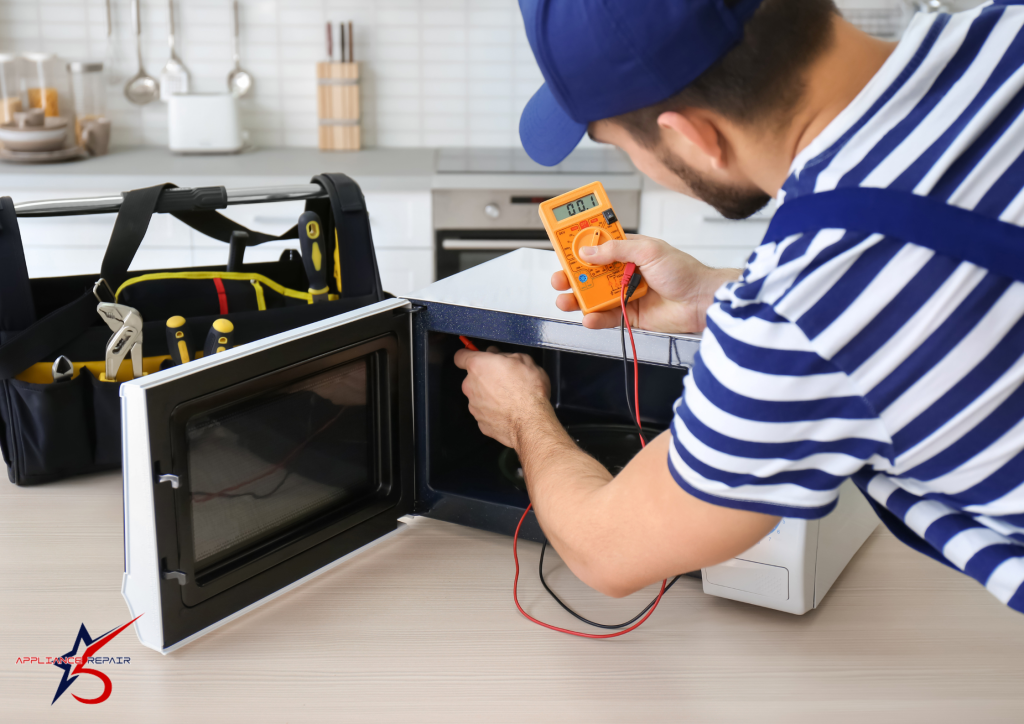
- Multimeter (to test components for continuity)
- Screwdriver
- Your microwave’s full model number (found on a sticker inside the door frame)
- Replacement parts if needed (always order using the full model number)
Top 4 Most Common Reasons Your Microwave Is Not Working
Cause 1: Blown Main Fuse (Most Common)
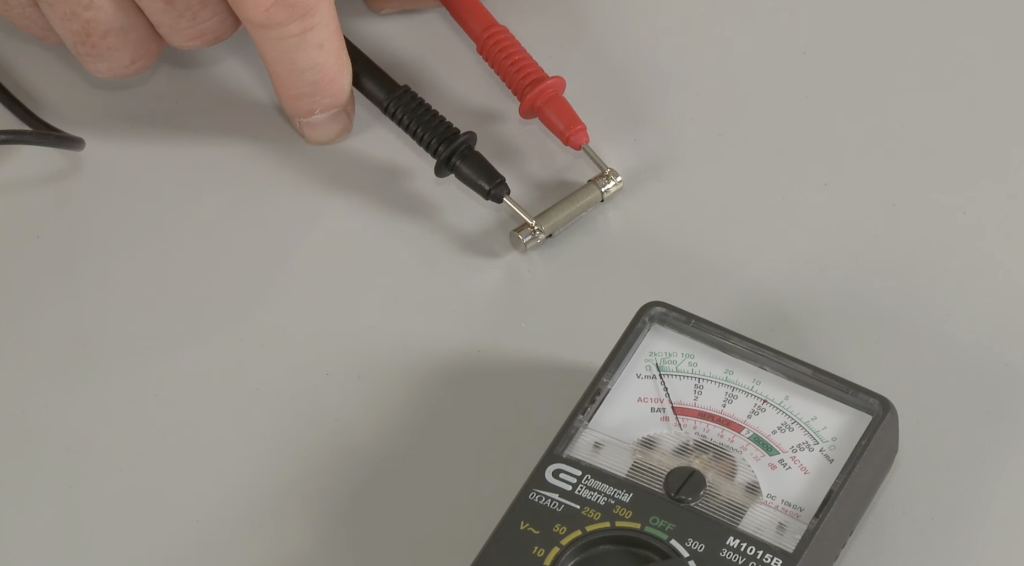
The most common reason a microwave stops working entirely is a blown main fuse. The main fuse is a safety component that cuts off power to the entire unit when something goes wrong — such as a power surge or a faulty part elsewhere in the microwave.
Here is how to check it:
- Unplug the microwave.
- Locate the main fuse inside the microwave casing (refer to your model’s service manual).
- Use a multimeter to test the fuse for continuity — meaning a continuous electrical path is present.
- If the fuse tests negative for continuity, it is blown and needs to be replaced.
Important: A blown main fuse is very often caused by a defective door switch (see Cause 2 below). If you replace the fuse without checking the door switches, the new fuse may blow again immediately.
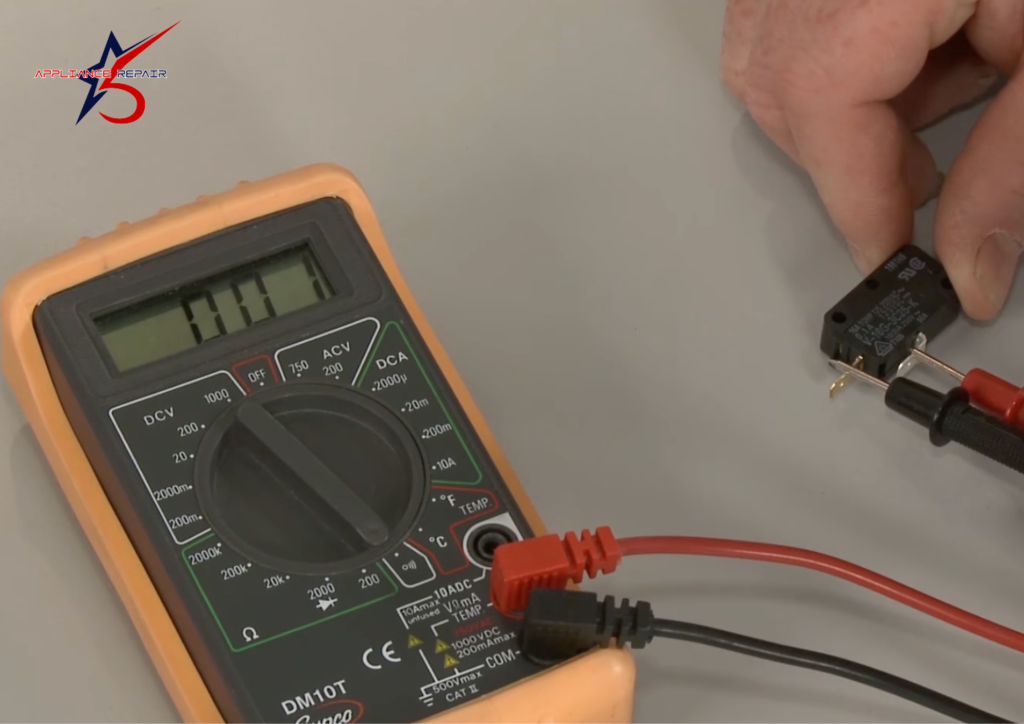
Cause 2: Defective Door Switch
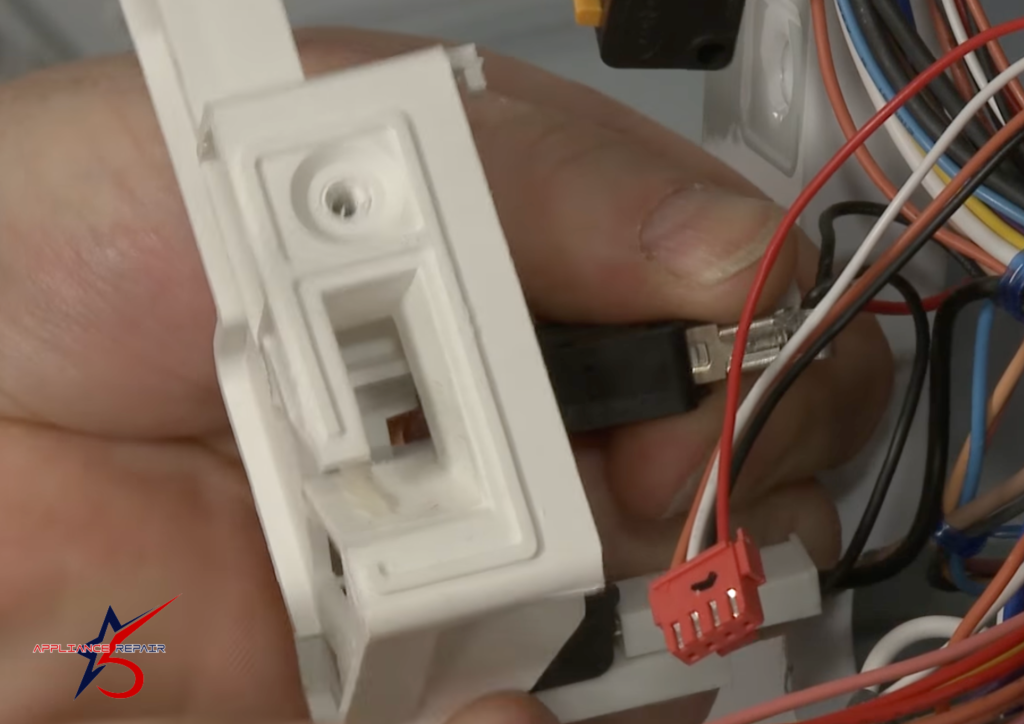
Most microwaves have three or four door switches — also called interlock switches — that signal to the microwave that the door is fully closed and it is safe to operate. If one or more of these switches becomes defective, the microwave may refuse to start or heat even when the door appears to be properly shut.
Here is how to check it:
- Unplug the microwave.
- Access the door switches inside the casing.
- Test each switch individually with a multimeter for continuity.
- Any switch that fails the continuity test needs to be replaced.
Pro Tip: Always check and replace any faulty door switches before replacing the main fuse. This prevents the new fuse from blowing immediately after installation.
Cause 3: Blown Thermal Fuse, Cavity Fuse, or Thermal Protector
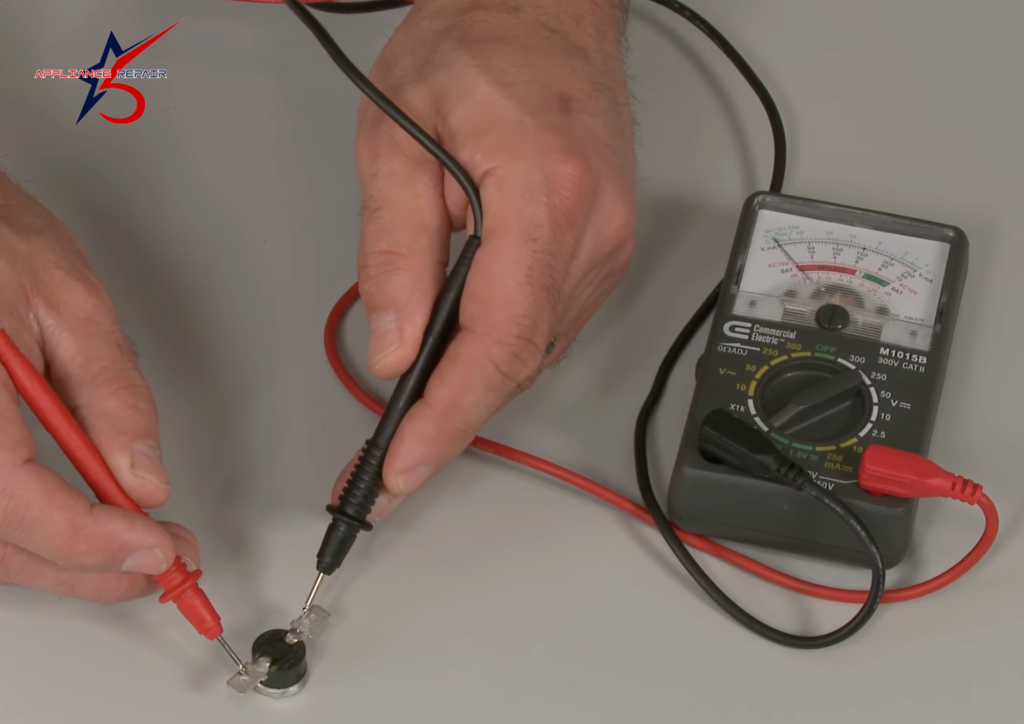
In addition to the main fuse, microwaves contain secondary thermal safety components — including a thermal fuse, cavity fuse, and thermal protector. These are designed to cut off power to the microwave if the unit overheats, protecting both the appliance and your home from fire or damage.
If your microwave was running very hot before it stopped working, one of these thermal components is likely the culprit.
Here is how to check it:
- Unplug the microwave.
- Locate each thermal safety component using your model’s service manual.
- Test each one with a multimeter for continuity.
- Replace any component that does not show continuity.
Pro Tip: If your thermal fuse has blown, investigate why the microwave overheated in the first place. Running the microwave empty, blocked ventilation, or a failing fan can all cause overheating and blow these safety components repeatedly.
Cause 4: Defective Main Control Board (Least Common)
The main control board is the brain of your microwave — it controls every function from cooking time to power levels. If the control board is defective, the microwave may be completely unresponsive even if all other components are working fine.
However, a faulty control board is not a common problem, and control boards are expensive to replace. This is why it is important to inspect and test the fuse, door switches, and thermal components first. Only consider the control board as the cause after ruling out everything else.
Signs the control board may be defective:
- The display is completely blank or showing error codes
- Buttons are unresponsive even after the fuse and switches have been checked and are working
- The microwave turns on and off randomly
Replacing a control board is a job best left to a professional appliance repair technician.
Quick Diagnosis Guide: Where to Start
- Microwave completely dead, no light or display: Start with the main fuse, then check door switches.
- Microwave was running hot before stopping: Check thermal fuse, cavity fuse, and thermal protector.
- Door closes but microwave won’t start: Check door switches first.
- Display works but microwave is unresponsive: After ruling out all other causes, inspect the control board.
Common Mistakes to Avoid
- Replacing the fuse without checking door switches: The new fuse will blow again immediately if a faulty door switch caused the original failure.
- Assuming the control board is the problem first: Control boards are expensive. Always test cheaper, more common components first.
- Working inside the microwave while it is plugged in: Never do this under any circumstances.
- Ordering parts without the full model number: Microwave parts vary significantly between models. Always use the full model number to order the correct replacement part.
- Touching the capacitor: Even unplugged, the high voltage capacitor can hold a lethal charge. Never touch it unless you are a trained technician.
Know When to DIY and When to Call a Pro
A microwave that stops working is frustrating, but it does not always mean you need a new one. In many cases, the fix comes down to one of these four common causes — a blown fuse, a faulty door switch, a thermal safety component, or a defective control board. By working through them in order, you can quickly identify the problem and decide whether it is a simple part swap or a job for a professional.
Remember — while basic diagnosis can be done at home, opening up a microwave and replacing internal components involves serious safety risks due to the high voltage capacitor. If you are not confident working with appliance electronics, do not take chances.
Book an appliance repair service today and let our certified technicians diagnose and fix your microwave safely, quickly, and at a fair price.
FAQs
Is it worth repairing a microwave or should I just replace it?
It depends on the age and cost of the repair. If the fix involves a simple fuse or door switch — parts that typically cost $5 to $20 — repair is almost always worth it. If the control board or magnetron needs replacing, the repair cost may approach or exceed the price of a new microwave, making replacement the smarter option.
How do I find my microwave's model number?
The model number is usually printed on a sticker located inside the door frame, on the back of the unit, or inside the cabinet above the microwave for over-the-range models. You will need the full model number to order the correct replacement parts.
Why does my microwave keep blowing fuses?
A repeatedly blowing fuse is almost always a sign of a defective door switch. The faulty switch creates an electrical fault that blows the fuse every time you try to use the microwave. Replace the door switch and the fuse at the same time to solve the problem permanently.
Can I test a microwave fuse without a multimeter?
A multimeter is the most reliable way to test a fuse. However, you can do a basic visual inspection — a blown fuse may show a broken filament or burn marks inside the glass casing. That said, some fuses blow without any visible sign, so a multimeter test is always the most accurate method.
How long do microwaves typically last?
The average lifespan of a microwave is 7 to 10 years with normal use. If your microwave is under 7 years old and the repair involves a fuse or door switch, it is almost always worth fixing. If it is over 10 years old and requires a major component repair, replacement may be more cost-effective.