
You turn the knob, hear the clicking — but the burner never lights. Or maybe one burner ignites fine while another refuses to cooperate. Gas cooktop ignition problems are one of the most common appliance complaints, and in many cases the fix is simpler than you’d expect.
Before you schedule a repair call, it’s worth working through a few basic checks. Most ignition issues come down to one of a handful of causes — clogged burner caps, moisture, a dirty igniter, or a worn-out spark module. This guide walks you through each one clearly, so you can diagnose the problem, fix what you can at home, and know when it’s time to bring in a professional.
How Gas Cooktop Ignition Works
Understanding the basic mechanism makes troubleshooting much easier. When you turn a gas cooktop knob, two things happen simultaneously: the gas valve opens to release gas to the burner, and the ignition system sends an electrical spark to light it.
That spark comes from a ceramic igniter — a small white or grey tip you can see poking up near each burner. The spark jumps from the igniter to the burner cap, igniting the gas as it flows out. If anything interrupts either side of that process — the gas flow or the spark — the burner won’t light.
Most modern gas cooktops use a standing pilot-free electronic ignition system, meaning there’s no permanent pilot flame. Every time you turn the knob, the system generates a fresh spark. This is more energy efficient but also means the ignition components take more wear over time.
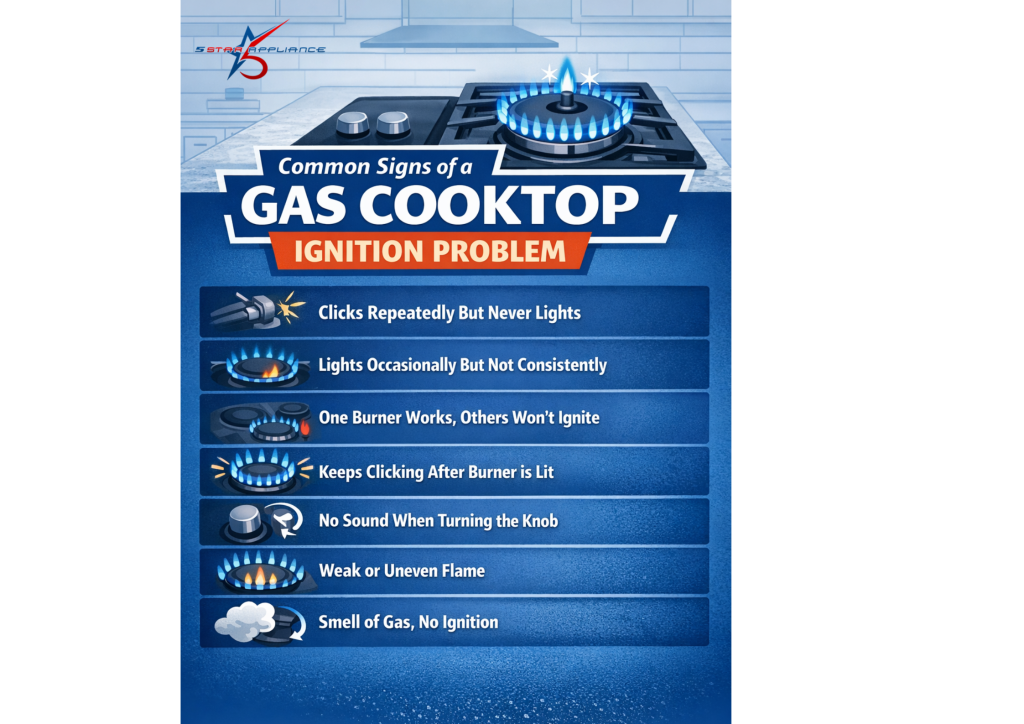
Common Signs of a Gas Cooktop Ignition Problem
- Burner clicks repeatedly but never lights
- Burner lights occasionally but not consistently
- One burner works fine while others don’t ignite
- Clicking continues even after the burner is lit
- No clicking sound at all when the knob is turned
- Weak or uneven flame once the burner does light
- Gas smell without ignition
Safety Before You Start
Gas appliances require extra caution. Before troubleshooting any ignition issue, keep these rules in mind:
- If you smell strong gas at any point, stop immediately, leave the house, and call your gas provider or emergency services
- Always make sure the cooktop knobs are in the off position before inspecting burner components
- Disconnect the cooktop from power before cleaning around igniters — on most models this means unplugging the unit or flipping the breaker
- Never use water directly on igniters or electrical components
- If you’re ever uncertain, stop and call a licensed appliance repair technician
Fix 1: Clean the Burner Cap and Crown
This is the most common cause of ignition failure — and the easiest fix. Food debris, grease, and boiled-over liquids frequently clog the small ports around the burner cap, blocking gas flow and preventing a clean ignition.
How to do it:
- Make sure all burners are off and completely cool
- Lift off the burner grate and remove the burner cap — it simply lifts off with no tools required on most models
- Inspect the small holes around the edge of the cap. If they look clogged or discolored, that’s your problem
- Soak the cap in warm soapy water for 20–30 minutes
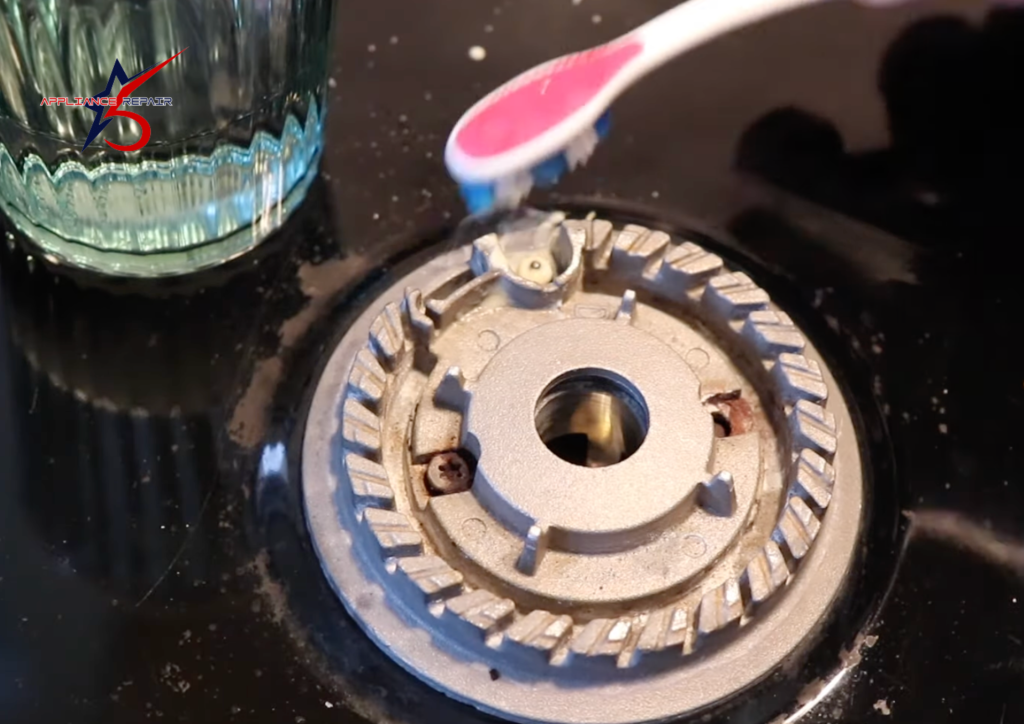
- Use a soft brush — an old toothbrush works perfectly — to scrub away residue from the ports
- Clear any stubborn blockages with a toothpick or straightened paper clip. Never use anything metallic that could enlarge the holes
- Rinse thoroughly, dry completely, and reassemble
Important: Never reassemble a wet burner cap. Moisture in the ports is itself a common ignition problem — even a slightly damp cap can prevent the burner from lighting reliably.
Fix 2: Dry Out Moisture Around the Igniter
If your cooktop suddenly stopped igniting after a boilover, spill, or cleaning, moisture is almost certainly the culprit. Water on or around the ceramic igniter tip disrupts the electrical spark and prevents ignition.
How to fix it:
- Remove the burner grates and caps to expose the igniter tips
- Use a dry microfiber cloth to carefully wipe around the base of each igniter
- For stubborn moisture, use a hairdryer on a low heat setting held several inches away — never apply direct heat close to the igniter
- Leave the cooktop open and allow it to air dry for at least 30 minutes before testing
- Reassemble and test each burner
This fix resolves a surprisingly large number of ignition complaints — especially after cleaning days when water gets into places it shouldn’t.
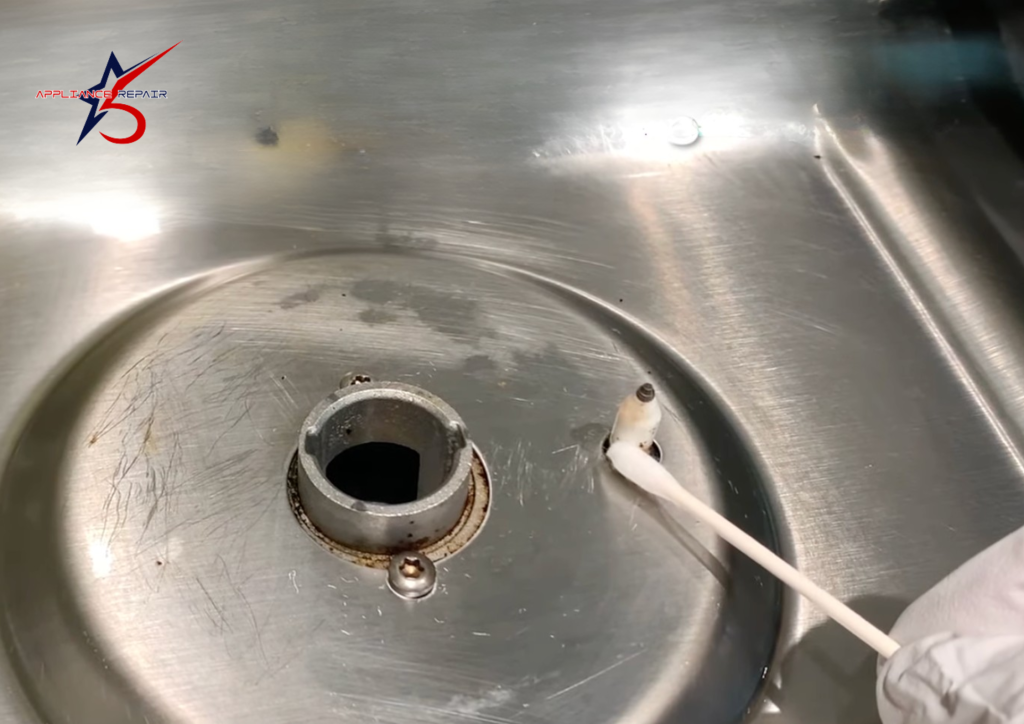
Fix 3: Clean the Igniter Tip
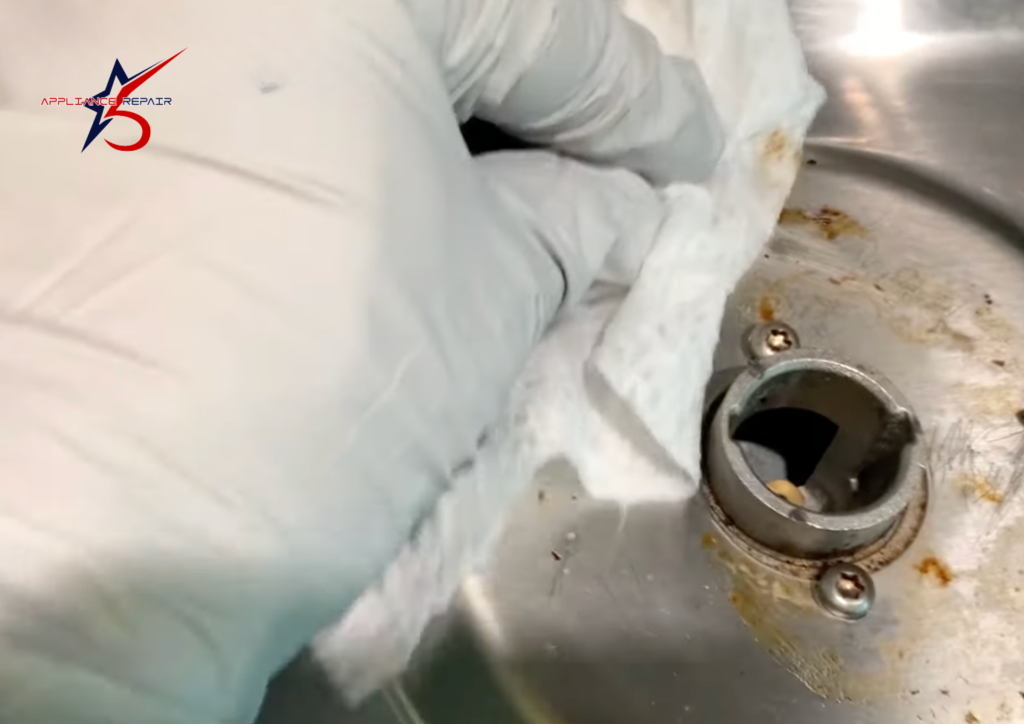
Even without a major spill, igniters accumulate grease and carbon buildup over time. A dirty igniter tip produces a weak or inconsistent spark — which means the burner clicks but struggles to catch.
How to clean it:
- Power the cooktop off completely before touching igniters
- Locate the ceramic igniter tip near each burner — it’s the small white or off-white protrusion
- Using a dry toothbrush or a cotton swab lightly dampened with rubbing alcohol, gently scrub the tip
- Remove any visible buildup, being careful not to apply pressure that could chip or crack the ceramic
- Allow to dry fully before restoring power and testing
Never use steel wool, abrasive pads, or anything that could scratch or damage the ceramic surface. A cracked igniter won’t spark reliably and will need to be replaced.
Fix 4: Check the Burner Cap Is Seated Correctly
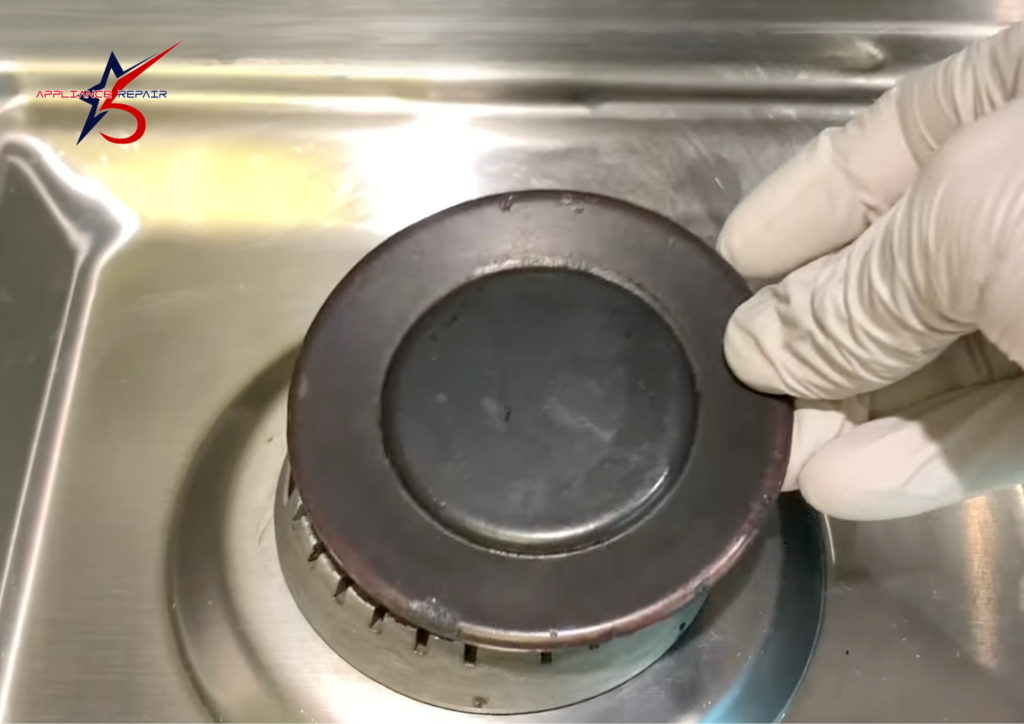
This one catches a lot of homeowners off guard. If the burner cap is even slightly misaligned after cleaning or after a spill, the igniter can’t make proper contact and the burner won’t light — or will light unevenly.
How to check:
- Remove the burner grate and lift off the burner cap
- Look at the base underneath — there’s usually a small notch or alignment groove
- Replace the cap carefully, making sure it sits flat and the notch lines up correctly
- Give it a gentle press to confirm it’s fully seated
- Replace the grate and test the burner
It sounds almost too simple, but a misaligned cap is responsible for more ignition calls than most people realize.
Fix 5: Inspect and Reset the Spark Module
If multiple burners are failing to ignite at the same time, the problem likely isn’t with any individual burner — it’s with the spark module, which controls ignition across the whole cooktop.
The spark module is an electronic component, usually located beneath the cooktop surface. On many models you can access it by lifting the cooktop top panel. Before assuming it needs replacement, try a simple reset:
- Unplug the cooktop completely from the wall outlet
- Wait 5 full minutes
- Plug it back in and test the burners
This resets the module’s internal electronics and resolves the issue in some cases. If multiple burners still won’t spark after a reset, the module may need professional testing or replacement.
Fix 6: Check the Power Supply
Gas cooktops still require electricity to power the ignition system. If there’s no clicking at all when you turn the knob — on any burner — the issue may be electrical rather than mechanical.
Check the following:
- Is the cooktop plugged in securely?
- Has the circuit breaker for the cooktop tripped? Check your panel and reset if needed
- If the cooktop is hardwired, is the disconnect switch in the on position?
- Check the cooktop’s internal fuse if your model has one — refer to the owner’s manual for location
A completely silent cooktop that produces no clicking on any burner is almost always an electrical supply issue rather than a burner problem.
When the Flame Is Weak or Uneven
Sometimes the burner lights but the flame looks wrong — too low, uneven, or yellowish instead of blue. This usually points to a gas flow issue rather than an ignition problem:
- Yellow or orange flame — incomplete combustion, often caused by clogged burner ports or incorrect air-to-gas mixture
- Uneven flame pattern — some ports are blocked, needs the burner cap cleaned thoroughly
- Very low flame — possible low gas pressure or a partially closed gas valve
- Flame lifting off the burner — too much airflow or gas pressure, may need a technician to adjust
A healthy gas flame should burn steady and blue with only small yellow tips at the very top.
HVAC Maintenance Tips to Prevent Ignition Problems
A little regular care goes a long way with gas cooktops:
- Wipe down burner caps after every use — don’t let food residue build up
- Remove and deep clean burner caps monthly if you cook frequently
- Never use abrasive cleaners on igniters — they damage the ceramic surface
- Dry the cooktop thoroughly after cleaning — moisture is the enemy of reliable ignition
- Check burner cap alignment every time you replace them after cleaning
- Schedule a professional service every 2–3 years to inspect gas connections, valves, and ignition components
When to Call a Technician
Most of the fixes above are safe and manageable at home. But call a professional if:
- You smell gas at any point during troubleshooting
- The igniter is visibly cracked or damaged
- Burners still won’t light after cleaning, drying, and realigning everything
- The spark module needs replacement
- The flame pattern is severely abnormal or the burner produces soot
- You’re uncomfortable working around gas appliances at any point
Gas appliances are not the place to improvise. If something doesn’t feel right, trust that instinct and call a technician.
Conclusion
Most gas cooktop ignition problems come down to something simple — a clogged burner cap, a damp igniter, or a cap that’s slightly out of alignment. Work through the fixes in this guide one by one, and there’s a good chance you’ll have your cooktop back to normal without a service call. When the issue goes beyond basic maintenance, professional help is the safest next step.
Need a Hand?
If you’ve tried these steps and your cooktop still isn’t cooperating, our appliance repair team is ready to help. We’ll diagnose the issue quickly and fix it properly — no guesswork and no unnecessary parts.
Contact us today to schedule your service and get your cooktop working like it should again.
FAQs
Why does my gas cooktop click but not light?
At 8 years old your dryer is approaching but has not yet reached the end of its typical service life. Repair makes sense for inexpensive single-component fixes. Avoid investing in major repairs like motor or control board replacement at this age — the 50% rule should guide your decision.
Is it safe to use a gas cooktop if one burner won't ignite?
You can use the other burners, but avoid the one that won’t ignite. Turning the knob without ignition releases gas — if it doesn’t light, turn it off immediately and ventilate the area before investigating.
Why does my gas cooktop keep clicking after the burner is lit?
Continuous clicking after ignition is almost always caused by moisture or food debris around the igniter. Clean and dry the igniter and burner cap thoroughly and the clicking should stop.
Can I replace a gas cooktop igniter myself?
Igniter replacement is manageable for a confident DIYer on many models — the part is inexpensive and usually clips or screws into place. However, if it involves disturbing gas connections, always call a licensed technician.
How long do gas cooktop igniters last?
With normal use and regular cleaning, igniters typically last 5–10 years. Heavy use, frequent boilovers, and abrasive cleaning all shorten their lifespan.