
If you’ve ever walked into your kitchen and caught a whiff of gas near your oven, you know that unsettling feeling. Is it dangerous? Should you leave the house? Or is it just a normal part of cooking? The answer depends on when you smell it, how strong it is, and what’s happening with your appliance at the time.
Here’s everything you need to know — straight from the repair bench.
First: Know the Difference Between Normal and Not Normal
Not every gas smell is an emergency. In fact, a brief, faint odor when you first turn on your oven is completely expected. Gas appliances release a small amount of unburned gas before the igniter catches. That smell should disappear within a minute or two once the burner is lit.
This is normal:
- A brief whiff when the oven first ignites
- A faint smell during the first use after long periods of non-use
- A slight odor when the oven is preheating
This is NOT normal:
- A strong, persistent smell that doesn’t go away
- Gas smell when the oven is completely off
- The odor getting stronger over time
- Smell accompanied by a hissing sound
Common Reasons Your Oven Smells Like Gas
1. Delayed Ignition
This is one of the most common culprits. If your igniter is weak or dirty, it takes longer to light the gas — meaning unburned gas builds up briefly before catching. You may notice a small “pop” or “whomp” sound when it finally ignites. This is more annoying than immediately dangerous, but it does put stress on your appliance and should be addressed.
Fix: Clean or replace the igniter. A technician can test igniter resistance to determine if it’s failing.
2. A Faulty or Dirty Burner
Food debris, grease buildup, or a cracked burner can disrupt the gas-to-air ratio, causing incomplete combustion and lingering odors. If you’ve had a boilover recently, this is likely the issue.
Fix: Remove the burner grates and caps, clean thoroughly, and inspect for visible cracks or damage. Replace any damaged components.
3. A Weak or Failing Gas Valve
The gas valve controls the flow of gas to your burners. If it’s not closing properly, small amounts of gas can seep through even when the oven is off. This is a more serious issue that requires professional attention.
Fix: Do not attempt to repair a gas valve yourself. Call a licensed appliance technician.
4. Loose or Damaged Gas Line Connections
Over time, the connections between your oven and your home’s gas supply can loosen or corrode. Even a tiny gap in the line can allow gas to escape slowly.
Fix: This is a job for a professional. A technician will use a leak detector or soapy water test to identify the exact point of the leak and reseal or replace the connection.
5. First Use After Installation or Long Non-Use
If your oven is brand new or hasn’t been used in months, the gas smell during first use is typically just residual gas or manufacturing oils burning off. It should resolve after one or two uses.
Fix: Run the oven empty at a high temperature for 30–45 minutes in a well-ventilated space.
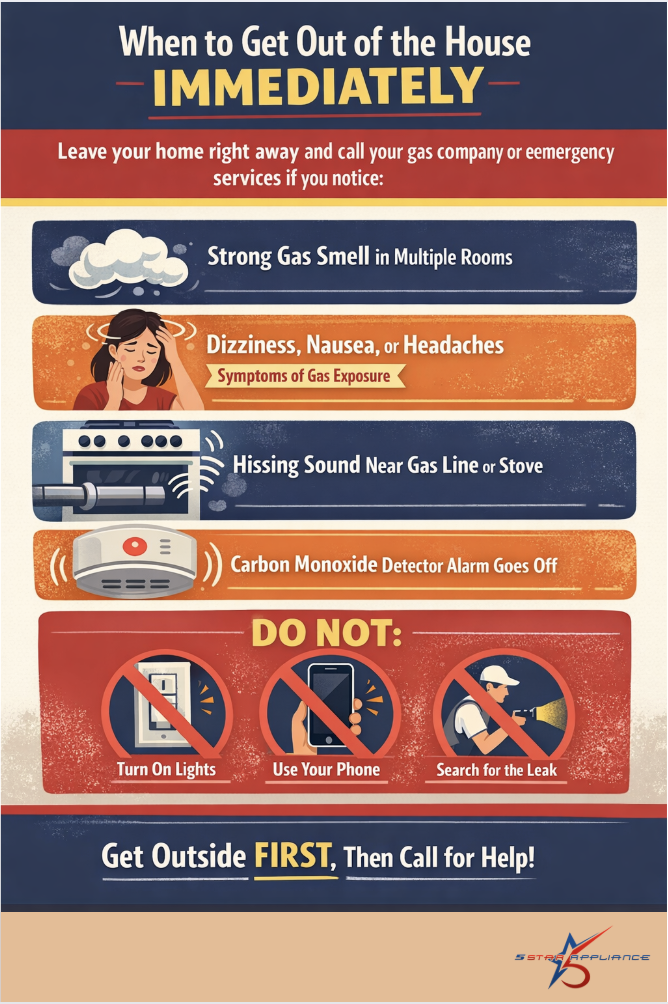
When to Get Out of the House Immediately
Some situations call for immediate action — not troubleshooting. Leave your home right away and call your gas company or emergency services if you notice:
- A strong, sudden gas smell throughout multiple rooms
- Dizziness, nausea, or headaches — symptoms of gas exposure
- A hissing sound near the oven or gas line
- Your carbon monoxide detector goes off
Do not turn any lights on or off, do not use your phone inside the house, and do not try to locate the leak yourself. Get outside first, then call for help.
Simple Safety Checks You Can Do Right Now
If the smell is faint and you’re not in immediate danger, here are a few things you can check before calling a technician:
- Make sure all burner knobs are fully in the “off” position — it’s easy to bump a knob without realizing it.
- Check for food debris around the burners — clean any buildup that could be causing incomplete combustion.
- Ventilate the kitchen — open windows and run the range hood fan.
- Do the soapy water test on visible connections — apply soapy water to the connector where the oven meets the gas line. Bubbles indicate a leak.
- Trust your nose — if it smells stronger than usual or won’t go away, stop using the oven and call a professional.
When to Call a Professional
You should always call a licensed appliance repair technician if:
- The smell persists after cleaning and basic troubleshooting
- You suspect a faulty igniter, gas valve, or burner
- Your oven is making unusual sounds during ignition
- You’ve noticed the smell getting worse over time
- You’re not comfortable working with gas appliances yourself
Gas appliances are not a DIY gray area. When in doubt, it’s always better to have a professional inspect the unit than to risk a gas leak or incomplete combustion in your home.
Conclusion
A gas smell from your oven isn’t always cause for panic — but it’s never something to ignore. Most of the time, the fix is straightforward: a dirty burner, a weak igniter, or residual gas from startup. But in some cases, it signals a more serious issue that needs professional attention fast.
If you’re unsure what you’re dealing with, err on the side of caution. Your family’s safety is always worth a service call.
Have questions about your gas oven or need a repair? Contact us today — we’ll diagnose the problem and get your kitchen back to safe and fully functional.
FAQs
Is it normal for a gas oven to smell like gas?
A brief, faint gas smell when your oven first ignites is normal. Unburned gas escapes for a second or two before the igniter catches. However, if the smell is strong, persistent, or present when the oven is off, that’s a sign of a problem that needs attention.
How long should a gas smell last when I turn on my oven?
No longer than 30 to 60 seconds. Once the burner is fully lit, the smell should disappear. If it lingers beyond that, your igniter may be weak or your burner may need cleaning.
Can a dirty oven cause a gas smell?
Yes. Grease buildup and food debris around the burners can disrupt the flame and cause incomplete combustion, which produces an odor. Regular cleaning can prevent this.
What should I do if my oven smells like gas but isn't on?
Turn off all gas appliances, leave the house immediately, and call your gas company or emergency services from outside. Do not flip any light switches or use electronics inside — a spark could be enough to ignite accumulated gas.
Is a gas smell from the oven dangerous? I
It can be. A small smell during ignition is harmless, but a strong or persistent gas odor indicates a potential leak, which is a serious safety hazard. Natural gas is highly flammable and prolonged e