
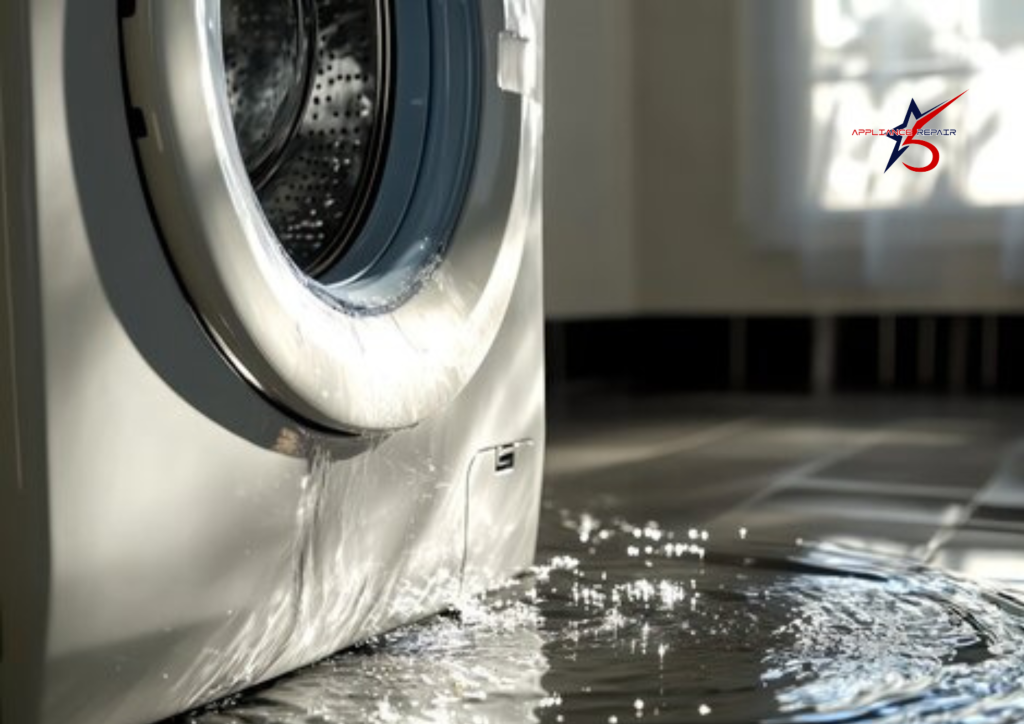
A leaking washing machine is more than a minor inconvenience — it’s a problem that can quickly spiral into damaged flooring, mold growth, and costly water damage throughout your home. The good news is that most washing machine leaks have identifiable causes, and many can be resolved quickly once you know what you’re looking for.
This guide walks you through the most common causes of a leaking washing machine, how to diagnose where the leak is coming from, what you can fix yourself, and when it’s time to call a certified appliance repair professional.
Why You Should Never Ignore a Washing Machine Leak
Even a slow, steady drip deserves immediate attention. Water leaking from a washing machine can seep beneath flooring, weaken subfloors, soak into drywall, and create the damp conditions mold needs to thrive. Left unaddressed for days or weeks, what started as a minor leak can become a significant structural and health issue. On top of that, washing machines operate on high-voltage electricity — water near electrical connections is a genuine safety hazard. The moment you spot a leak, shut the machine off, unplug it, and turn off the water supply valves behind the unit before doing anything else.
Step One: Find Where the Leak Is Coming From
Fixing a washing machine leak starts with correctly identifying the source. Many DIY repair attempts fail simply because the wrong component was targeted. To locate the source, dry the floor completely, then run a short cycle and watch carefully — noting exactly when the leak appears (during filling, washing, spinning, or draining) and where on the machine the water first shows up. These two pieces of information will point you directly to the cause.
The Most Common Causes of a Leaking Washing Machine
1. Loose or Worn Inlet Hoses
The hot and cold water supply hoses that connect to the back of your washer are the most frequent cause of washing machine leaks. Over time, the rubber washers inside the hose fittings deteriorate, and the connections can loosen from vibration. This typically produces a drip or stream from the back of the machine during the fill cycle.
How to fix it: Turn off the water supply, disconnect both hoses, and inspect the rubber washers inside each fitting. Replace any that appear cracked, flattened, or hardened. Reconnect the hoses and hand-tighten the fittings, then give each an additional quarter-turn with pliers. Avoid overtightening, which can crack the fitting. As a general rule, inlet hoses should be replaced every five years regardless of visible condition.

2. Damaged or Poorly Connected Drain Hose
If water appears beneath or behind the machine during the spin or drain cycle, the drain hose is a likely suspect. This hose carries wastewater from the machine to your standpipe or utility sink, and it can develop cracks, kinks, or a loose connection at either end over time.
How to fix it: Pull the machine away from the wall and inspect the full length of the drain hose. Straighten any kinks, check that the hose clamp at the pump connection is tight, and ensure the hose is seated properly in the standpipe — ideally about six to eight inches deep, no more. If the hose shows cracking, brittleness, or visible damage, replace it. Drain hoses are inexpensive and easy to swap out.

3. Worn Door Gasket (Front-Load Washers)
Front-loading washing machines depend on a rubber door gasket to create a watertight seal every time the door closes. This gasket is exposed to heat, moisture, and friction with every single load, making it one of the more wear-prone components on a front-loader. Lint, coins, and soap residue can accumulate in the gasket’s folds, causing tears or preventing a proper seal.
How to fix it: Open the door and carefully inspect the entire circumference of the gasket. Look for tears, holes, stiffness, or areas where the gasket has pulled away from the drum opening. Clean the gasket thoroughly with a damp cloth to remove buildup. If the gasket is torn or deformed, it needs to be replaced. While a mechanically inclined homeowner can replace a door gasket, it is a moderately involved repair — if you’re not confident, this is a job worth handing to a technician.

4. Too Much Detergent or the Wrong Detergent Type
This is one of the most overlooked causes of washing machine leaks, and it’s entirely avoidable. Using too much detergent — or using standard detergent in a High-Efficiency (HE) washer — generates excessive suds that the machine’s drainage system can’t handle. The overflow has to go somewhere, and it typically comes out around the door or from beneath the machine.
How to fix it: Check your detergent packaging. If your washer is an HE model, you must use HE-labeled detergent, which produces far fewer suds. Reduce the amount you’re using — most people use two to three times more detergent than necessary. If excess suds are the culprit, run several empty rinse cycles to clear the buildup before resuming normal use.
5. Faulty Water Pump or Internal Hoses
If water is pooling directly beneath the center or front of the machine, the internal water pump or one of the internal hoses connecting it may be cracked, loose, or failing. The pump is responsible for draining water out of the tub, and it takes a beating over the life of the machine — especially if foreign objects like coins or small garments have passed through the system.
How to fix it: Accessing the pump requires removing the machine’s outer panels, which is not a repair most homeowners should attempt without experience. If you suspect the pump is the issue, contact a qualified appliance repair technician. Attempting this repair incorrectly can cause further damage and is unlikely to save you money in the long run.
6. Cracked Outer Tub
In older machines, or in units that have regularly run unbalanced or overloaded cycles, the outer tub itself can develop hairline cracks. This is one of the less common but most serious causes of a washing machine leak, as water escapes from the drum itself rather than from a connected component.
How to fix it: Stop using the machine immediately if you suspect a cracked tub. Depending on the age and model of your washer, a professional technician will advise whether repair or replacement makes more financial sense. In many cases with older machines, replacement is the more cost-effective path.
When To Stop and Call a Professional
Some of the repairs above — replacing inlet hose washers, adjusting the drain hose, switching to the correct detergent — are straightforward and require no special tools or technical knowledge. Others, like replacing a door gasket, diagnosing a pump failure, or investigating a cracked tub, require experience, the right tools, and a good understanding of how your specific machine is assembled.
Attempting complex washing machine repairs without proper knowledge can void your warranty, damage other components, or create new safety hazards. If you’ve checked the basics and the leak continues, or if the source of the leak isn’t clear, the smartest move is to call a certified appliance repair technician. A professional diagnosis is far less expensive than the cost of misdiagnosed DIY repairs — or the water damage that results from an unresolved leak.
Trust 5 Star Appliance Repair To Fix It Right
At 5 Star Appliance Repair, our certified technicians diagnose and repair washing machine leaks across all major brands and models — quickly, correctly, and at a fair price. We understand how disruptive a broken appliance can be, which is why we prioritize fast response times and lasting repairs that stand behind our work.
Don’t let a leaking washing machine turn into a costly water damage situation. Contact 5 Star Appliance Repair today and get your washer back to working order.
FAQs
Why is my washing machine leaking from the bottom?
Leaks from the bottom of the machine are most commonly caused by a damaged drain hose, a failing water pump, or loose internal hose connections. In older machines, a cracked outer tub can also cause water to appear beneath the unit. Turn off and unplug the machine, then contact a technician if you can’t identify the source.
Why is my front-load washer leaking from the door?
The most likely cause is a worn or torn door gasket (door seal). Debris buildup in the gasket folds can also prevent a proper seal. Inspect the gasket for damage and clean it thoroughly. If it’s torn, it will need to be replaced.
Can too much detergent cause a washing machine to leak?
The most common causes are dirty condenser coils, a failing compressor, or a refrigerant leak. All three result in a unit that runs but can’t transfer heat effectively.
Is a leaking washing machine dangerous?
It can be. Water near the machine’s electrical connections or outlet poses an electrocution and fire risk. Always unplug the washer before inspecting a leak, and don’t use the machine until the leak is resolved.
How much does it cost to fix a leaking washing machine?
The cost depends on the cause. Replacing inlet hose washers costs just a few dollars in parts. A door gasket replacement typically runs between $100–$200 with professional labor. Pump repairs or tub replacements can be higher. A technician can provide an accurate estimate after diagnosis.