

Refrigerator maintenance before winter ensures optimal efficiency, prevents frozen water lines, and extends appliance lifespan. Clean coils, check door seals, and adjust temperature settings to match seasonal changes for best performance.
Key Takeaways:
- Clean condenser coils
- Inspect and seal door gaskets
- Adjust temperature for colder ambient conditions
- Prevent frozen water lines
- Unplug unused outdoor/garage refrigerators
As the cold season approaches, preparing your refrigerator for winter becomes essential to ensure its efficiency, longevity, and energy savings. Cold weather can affect how refrigerators operate, especially if placed in unheated areas such as garages or basements. Proper maintenance helps avoid unexpected breakdowns, keeps food fresh, and reduces costly repairs.
In this blog, we will walk you through everything you need to know about refrigerator maintenance before winter, covering detailed steps, expert tips, and preventative measures that protect your appliance during the colder months.
Table of Contents
Why Refrigerator Maintenance Before Winter Matters

A refrigerator is one of the hardest-working appliances in your home. While it typically runs year-round without much attention, seasonal changes impact its performance. In winter, colder surrounding temperatures can interfere with the refrigerator’s thermostat and cooling system, sometimes causing it to run less efficiently or even stop cycling correctly.
Regular upkeep ensures:
- Stable internal temperatures to keep food safe.
- Reduced energy consumption for lower bills.
- Prevention of mechanical strain on motors, fans, and compressors.
- Extended appliance lifespan through consistent performance.
- Early detection of potential issues before they become costly repairs.
Check Placement and Environment
If your refrigerator is in a garage, basement, or utility area, winter can present challenges. These unheated spaces often drop below the ideal temperature range for refrigerators.
- Avoid freezing temperatures: If the room temperature falls below 50°F (10°C), the fridge’s thermostat may stop signaling the compressor to turn on, causing the freezer section to thaw.
- Use a garage refrigerator heater kit: Some manufacturers offer heating kits that help the thermostat function properly in cold environments.
- Insulate the area: Placing your refrigerator in a more temperature-stable location or using additional insulation around the appliance helps regulate performance.
Clean Refrigerator Coils Before Winter
Dust and dirt buildup on condenser coils forces the refrigerator to work harder, increasing energy use and wear. Before winter arrives:
- Unplug the appliance for safety.
- Locate the condenser coils (usually behind or beneath the refrigerator).
- Use a coil brush or vacuum to remove accumulated dust and debris.
- Wipe down surrounding areas to keep airflow unobstructed.
This simple task improves cooling efficiency and extends the life of your unit.
Inspect and Replace Door Seals
Cold air loss due to faulty door gaskets can compromise food preservation. Check your refrigerator’s seals by closing the door on a piece of paper:
- If the paper pulls out easily, the gasket may need replacing.
- Clean seals with mild soap and warm water to remove grease or grime.
- Apply a thin layer of petroleum jelly on the gasket edges to prevent cracking in low humidity.
Good seals ensure your refrigerator maintains consistent cooling without overworking.
Check and Adjust Internal Temperature Settings
Maintaining the right temperature is crucial year-round but even more so in winter. Recommended settings include:
- Refrigerator compartment: 37°F to 40°F (3°C to 4°C).
- Freezer compartment: 0°F (-18°C).
If your refrigerator is in a cold space, monitor temperatures with an appliance thermometer and adjust as necessary. Some models may require manual recalibration in winter to maintain proper cooling.
Refer to the FDA’s food storage chart to ensure your refrigerator and freezer are set to safe temperatures for food preservation.
Defrost and Clean the Freezer
Before the onset of winter, it’s wise to defrost your freezer if frost accumulation exceeds 1/4 inch. Excess frost not only reduces storage space but also forces the unit to consume more energy.
Steps to follow:
- Transfer frozen items into a cooler with ice packs.
- Turn off and unplug the refrigerator.
- Allow the ice to melt naturally or use a bowl of hot water to speed up the process.
- Clean the interior with a solution of baking soda and warm water.
A clean freezer ensures optimal efficiency and keeps food fresher for longer.
Check the Drain Pan and Drain Hole
Moisture buildup is common in refrigerators, and winter can exacerbate drainage issues if not addressed.
- Remove and clean the drain pan to prevent mold or odors.
- Clear the drain hole at the back of the refrigerator with a pipe cleaner or warm water to ensure smooth water flow.
This prevents leaks and keeps the refrigerator interior dry.
Examine the Water Line and Ice Maker
If your refrigerator has a built-in ice maker or water dispenser, freezing temperatures may pose risks:
- Inspect the water line for cracks or leaks. Cold temperatures can cause water lines to freeze, disrupting ice production.
- Insulate exposed lines to protect against freezing.
- Run the ice maker regularly to prevent clogs and keep the system active.
Check the Refrigerator Light and Electrical Connections
During winter, with shorter daylight hours and longer nights, indoor lighting becomes more important for daily tasks, including accessing your refrigerator. Ensuring that the refrigerator’s internal lightbulb is working properly helps you easily see the contents without fumbling in the dark. A functional light improves convenience and safety, preventing spills or accidents while searching for food.
Equally important is inspecting the refrigerator’s power cord and plug for any signs of wear, fraying, or damage. Cold temperatures can make wires more brittle, increasing the risk of electrical faults or interruptions. Addressing any damaged cords promptly helps maintain safe and reliable operation throughout the winter season.
Perform a Deep Cleaning Before Winter
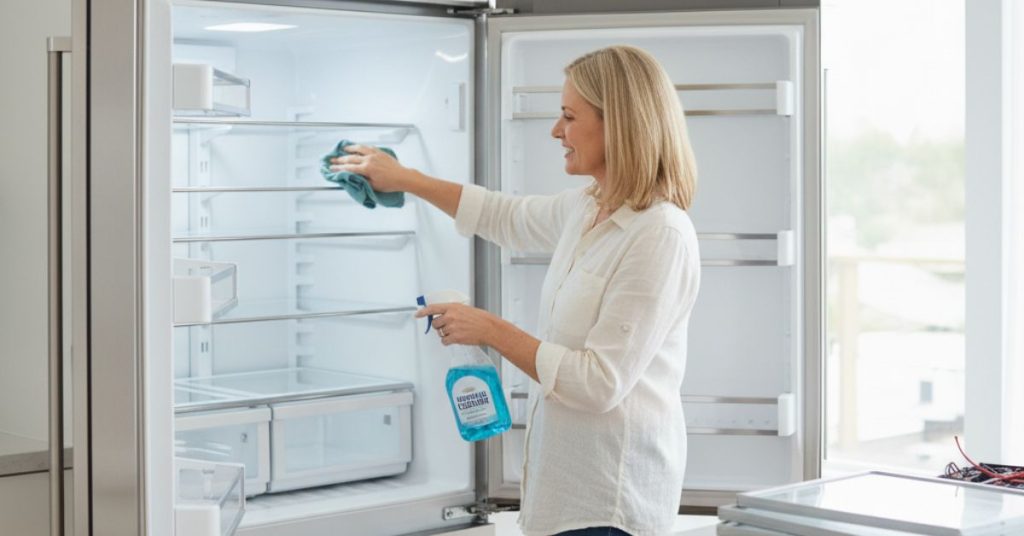
Seasonal deep cleaning is a simple yet effective way to keep your refrigerator running efficiently through the colder months. It helps eliminate dirt, bacteria, and buildup that can affect both performance and food safety.
- Remove all items and wipe down shelves, bins, and compartments with mild soap.
- Clean door handles and exterior surfaces.
- Replace water filters for refrigerators with dispensers to ensure clean drinking water.
- Vacuum and clean condenser coils to prevent overheating and improve efficiency.
- Check and clean the drip pan to avoid mold and unpleasant odors.
- Inspect and clean door seals to ensure a tight closure and prevent cold air leaks.
- Sanitize the ice maker and empty old ice to avoid stale odors or contamination.
Schedule Professional Refrigerator Maintenance
While many tasks are manageable on your own, scheduling professional appliance maintenance before winter ensures comprehensive care. A technician can:
- Inspect refrigerant levels.
- Test electrical components.
- Calibrate thermostat accuracy.
- Perform preventative repairs.
- Check and lubricate door hinges for smooth operation.
- Inspect and clean internal fans to maintain proper airflow.
- Evaluate energy efficiency and recommend upgrades if needed.
Professional servicing provides peace of mind and ensures your refrigerator is prepared for seasonal changes.
For additional appliance safety advice this season, consult the U.S. Consumer Product Safety Commission’s home safety guide.
Who to Call for Refrigerator Maintenance and Repair Before Winter
If you’re unsure about handling winter prep on your own, calling in the experts makes all the difference. 5 Star Appliance Repair specializes in refrigerator maintenance and repair, offering fast, reliable service to ensure your appliance is running at peak efficiency before the cold sets in.
From seal checks to full system diagnostics, their technicians provide comprehensive appliance tune up for energy savings, helping you avoid costly breakdowns and extend your refrigerator’s lifespan. For expert care and peace of mind, trust 5 Star Appliance Repair this winter season.
Energy-Saving Tips for Winter Refrigerator Use
- Keep the refrigerator full: A well-stocked refrigerator retains cold air more efficiently, reducing temperature fluctuations and lowering overall energy consumption during winter.
- Avoid overloading: Overpacking your refrigerator blocks internal airflow, making it harder for cold air to circulate evenly and causing energy waste.
- Open the door less frequently: Limiting how often you open the fridge helps maintain stable internal temperatures, reducing energy use and improving overall cooling performance.
- Allow hot food to cool before storing: Placing hot food directly inside increases internal temperature, forcing the compressor to work harder and consume more energy unnecessarily.
These practices improve efficiency and energy savings throughout the winter. For more ways to save energy throughout the year, visit the U.S. Department of Energy’s guide on refrigerators and freezers.
Final Thoughts on Refrigerator Maintenance Before Winter
Taking the time to prepare your refrigerator before winter ensures food safety, energy efficiency, and reliable operation throughout the season. From cleaning coils and seals to checking temperature settings and inspecting water lines, each step plays a role in keeping your appliance at peak performance. For added security, consider scheduling a professional appliance inspection to address potential issues before they turn into costly repairs.
A little attention now saves time, money, and stress later — ensuring your refrigerator stays dependable, no matter how cold it gets outside. If you need expert help getting started, contact us now to schedule your winter-ready appliance service.
FAQs
Why is refrigerator maintenance before winter important?
Refrigerator maintenance before winter helps prevent efficiency loss, frozen water lines, and unexpected breakdowns during colder months. It ensures your appliance runs smoothly, especially in unheated spaces like garages or basements.
Can cold temperatures affect my garage refrigerator?
Yes, when the surrounding temperature drops below 50°F (10°C), the refrigerator’s thermostat may malfunction, leading to improper cooling or thawed food. A garage heater kit or insulation can help regulate performance.
How often should I clean my refrigerator coils?
You should clean your refrigerator coils at least twice a year—once before winter and again in the spring. Dirty coils reduce energy efficiency and force your fridge to work harder.
What’s the ideal refrigerator temperature during winter?
Keep the refrigerator set between 37°F and 40°F (3°C to 4°C) and the freezer at 0°F (-18°C). Use an appliance thermometer if your fridge is in a cold space to monitor and adjust settings.
Should I unplug my refrigerator in an unheated garage during winter?
If you’re not using it and temperatures will drop below freezing, it’s best to unplug the fridge. This prevents frozen components and reduces energy waste.