

You open your freezer and instead of neatly organized food, you find a wall of ice creeping across the back, coating your shelves, and turning your frozen goods into one giant frozen block. Sound familiar? Excessive ice buildup in your refrigerator freezer is one of the most common appliance problems homeowners face — and if you ignore it long enough, it will stop your freezer from cooling properly altogether.
The good news is that most causes of freezer ice buildup are fixable. In this guide we will walk you through exactly why ice builds up in your freezer, what you can do about it yourself, and when it is time to call a professional.
Why Does Ice Build Up in a Freezer?
A little frost inside your freezer is normal. But when ice starts accumulating faster than it should — coating the walls, floor, and shelves in thick layers — something is wrong. Here are the most common reasons it happens:
The freezer door is not sealing properly. When warm, humid air from your kitchen sneaks into the freezer through a damaged or worn door gasket, it immediately freezes on contact with the cold surfaces inside. The more air that gets in, the faster ice accumulates. This is the single most common cause of excessive freezer ice buildup.
The door is being opened too frequently or left open too long. Every time you open the freezer, warm moist air rushes in. If the door is opened very frequently throughout the day or left open longer than necessary, the humidity that enters can overwhelm the freezer’s ability to manage it — especially if the defrost system is already not keeping up.
The defrost system has failed. Your refrigerator has an automatic defrost system that periodically melts frost off the evaporator coils to prevent buildup. If any part of this system fails — the defrost heater, defrost thermostat, or defrost timer — frost will accumulate on the evaporator coils continuously without ever being melted away. Over time this creates a thick layer of ice that blocks airflow and causes the freezer to stop cooling properly.
The evaporator fan is not working. The evaporator fan circulates cold air throughout the freezer compartment. If it stops working, air circulation is reduced and moisture settles and freezes on surfaces rather than being properly managed by the system.
The freezer temperature is set too low. Setting your freezer colder than necessary can accelerate frost and ice formation, especially near vents and on walls.
How to Tell If You Have an Ice Buildup Problem
Not all frost is a problem. Here is how to tell the difference between normal frost and a real issue:
- Normal: A very thin layer of frost on the back wall of the freezer that disappears during the automatic defrost cycle
- Problem: Thick ice coating the back wall, floor, or shelves that does not go away on its own
- Problem: Ice blocking the vents inside the freezer
- Problem: Food in the freezer or refrigerator section not staying as cold as it should
- Problem: The freezer running constantly without cycling off
- Problem: Ice forming around the door frame or on the door gasket itself

What You Can Do Yourself
Step 1: Check the Door Gasket
The door gasket is the rubber seal that runs around the edge of your freezer door. Over time it can crack, warp, or pull away from the door — allowing warm air to leak in continuously.
To check it, close the freezer door on a piece of paper. If you can pull the paper out easily without any resistance, the gasket is not sealing properly and needs to be replaced. You can also visually inspect the gasket for cracks, tears, or sections that have pulled away from the door frame.
Replacing a door gasket is a straightforward DIY repair on most refrigerator models. Replacement gaskets are available online using your refrigerator’s model number.
Step 2: Manually Defrost Your Freezer
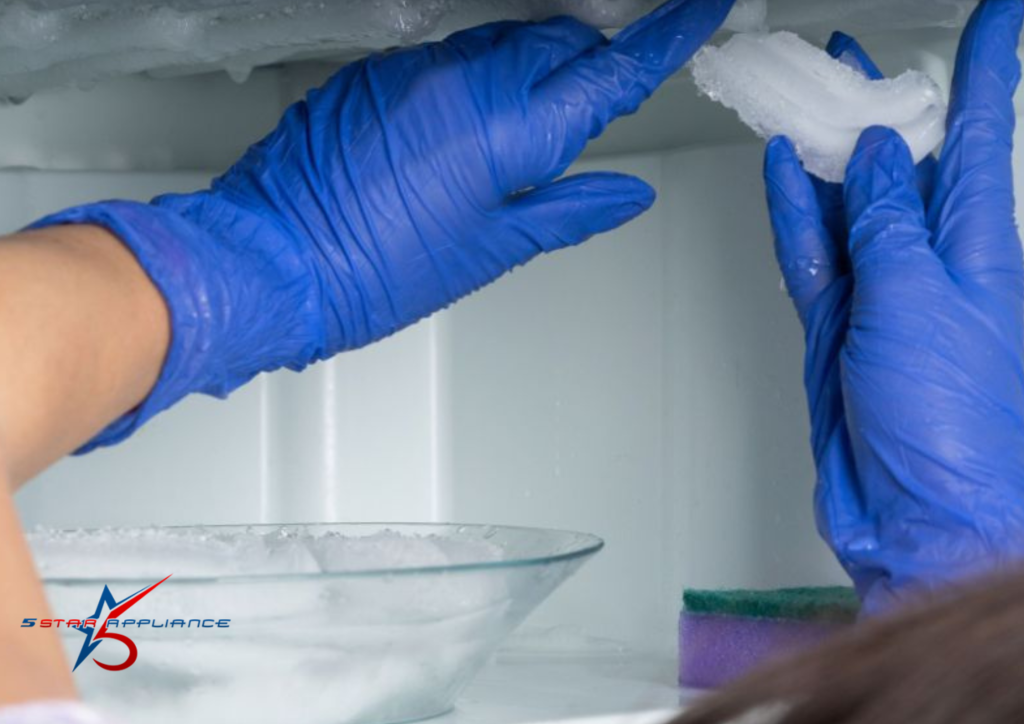
If ice has already built up significantly, a manual defrost is the fastest way to clear it out and give your freezer a fresh start. Here is how to do it safely:
- Remove all food from the freezer and store it in a cooler with ice.
- Unplug the refrigerator from the wall.
- Leave the freezer door open and place towels on the floor to catch water.
- Allow the ice to melt naturally — never use a knife, screwdriver, or sharp object to chip away ice as this can puncture the evaporator coils and cause serious damage.
- You can speed up the process by placing a bowl of hot water inside the freezer or using a hair dryer on a low setting, keeping it away from water at all times.
- Once all the ice has melted, dry the interior thoroughly and plug the refrigerator back in.
If the ice builds back up quickly after a manual defrost — within a few days or a week — this is a strong sign that the defrost system or door gasket is faulty and needs professional attention.
Step 3: Check the Freezer Temperature Setting
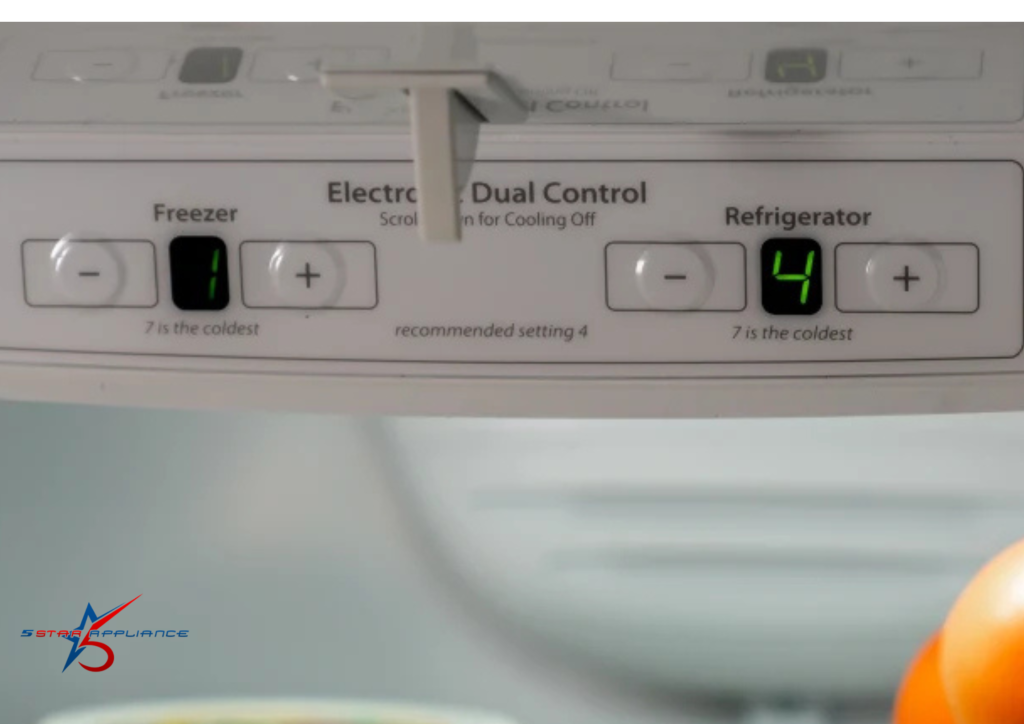
Your freezer should be set to 0°F (-18°C). If it is set colder than this, adjust it and monitor whether ice buildup slows down. While this alone will not fix a defrost system failure, it can reduce unnecessary frost accumulation caused by an overly cold setting.
Step 4: Check the Door Vents
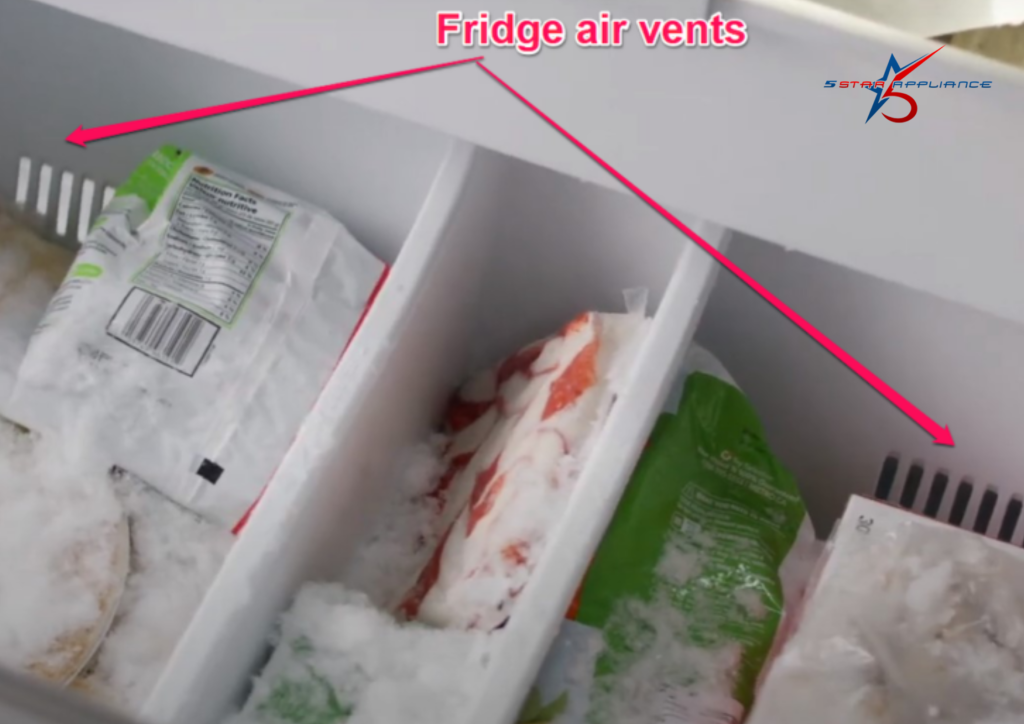
Look inside your freezer for the air vents — usually located on the back wall. Make sure no food packages are blocking them. Blocked vents restrict airflow and cause moisture to settle and freeze in concentrated areas.
.
When to Call a Professional
If you have checked the door gasket, manually defrosted the freezer, and the ice comes back within a week, the problem is almost certainly inside the defrost system. This is not a DIY repair — diagnosing and replacing defrost system components requires professional tools and expertise.
Call an appliance repair professional if:
- Ice returns quickly after a manual defrost
- The freezer is running constantly but not maintaining temperature
- You can hear the evaporator fan struggling or not running at all
- There is a thick block of ice visible behind the back panel of the freezer
- Your refrigerator section is also warming up alongside freezer ice buildup
A technician will test the defrost heater, defrost thermostat, and defrost timer to identify exactly which component has failed and replace it — getting your freezer back to normal without the guesswork.

FAQs
Why does my freezer keep icing up even after I defrost it?
If ice returns quickly after a manual defrost, the most likely cause is a failed defrost system component — the defrost heater, thermostat, or timer. A worn door gasket allowing warm air in is the other common culprit. Both require inspection and repair to permanently solve the problem.
Can ice buildup damage my freezer?
Yes. When ice builds up on the evaporator coils, it blocks airflow completely, forcing the compressor to work overtime. Over time this leads to compressor strain, higher energy bills, and eventually a complete loss of cooling. Addressing ice buildup early protects both your food and your appliance.
Is it safe to chip the ice out of my freezer?
No. Using sharp objects to chip ice can puncture the evaporator coils which run just behind the back panel of the freezer. A punctured coil releases refrigerant and requires a major repair. Always allow ice to melt naturally or use gentle heat like a hair dryer on a low setting.
How often should a freezer automatically defrost?
Most refrigerators run an automatic defrost cycle every 8 to 12 hours. Each cycle typically lasts 20 to 30 minutes. If your freezer is not defrosting automatically on this schedule, the defrost system has likely failed.
Is professional appliance maintenance better than DIY cleaning?
Basic cleaning helps maintain appliance performance, but professional maintenance includes detailed inspections and technical adjustments that homeowners cannot perform themselves. Certified technicians can detect hidden problems and optimize appliances for better energy efficiency.