
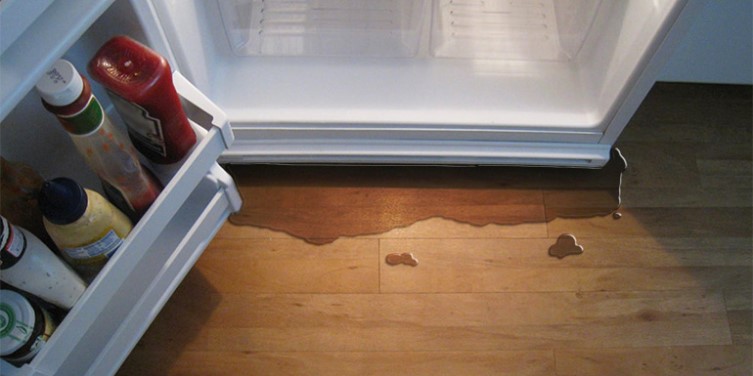
A puddle under your fridge is alarming — but in most cases, it is not a sign of a major appliance failure. The majority of refrigerator leaks come from one of a handful of simple, fixable causes that require no special tools and less than half an hour to resolve.
Here is exactly what is causing your fridge to leak and how to fix it today.
Is a leaking fridge actually serious?
Occasionally, yes. Left untreated, a fridge leak can warp hardwood floors, soak subfloor material, and create the damp conditions mold needs to grow. The water damage is often worse than the appliance problem itself.
The good news: most leaks are minor and entirely fixable without a repair technician.
The most common reasons your fridge is leaking
1. Clogged defrost drain
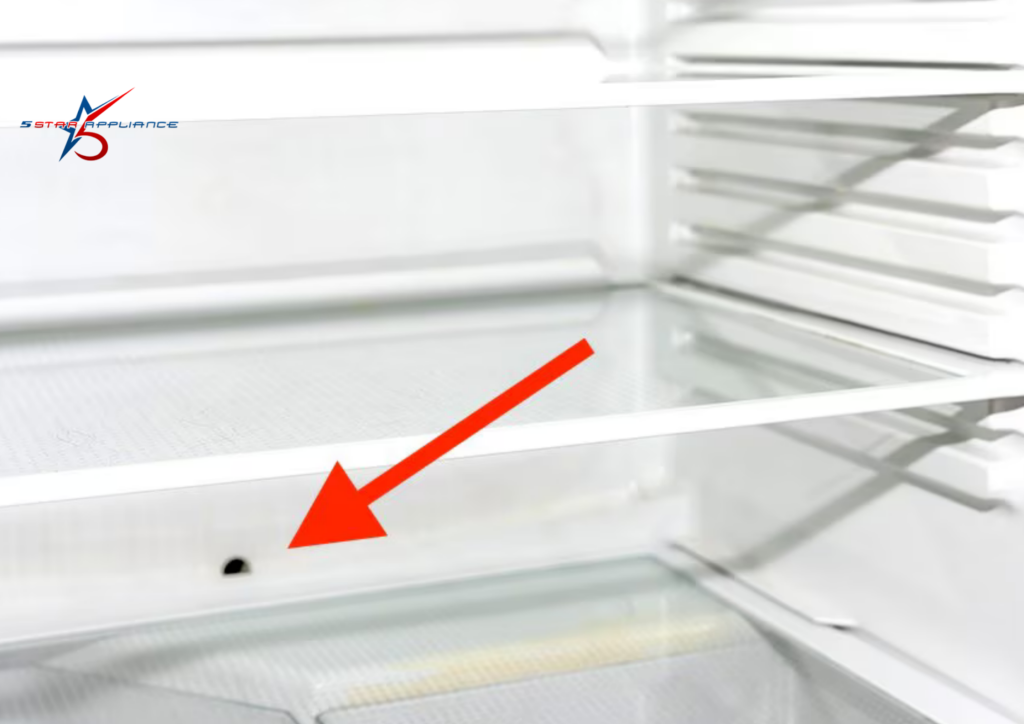
This is the single most common cause of refrigerator leaks. Your fridge has a defrost cycle that melts frost buildup and drains the water through a small drain hole at the back of the freezer compartment into a drain pan beneath the unit. When that drain gets clogged with food particles or ice, the water has nowhere to go — so it leaks onto your floor instead.
How to fix it: Unplug the fridge. Locate the drain hole at the back interior wall of the freezer. Pour a small amount of warm water into the drain using a turkey baster or small funnel to melt any ice blockage. Follow with a mixture of warm water and a few drops of dish soap to flush food debris through. Plug the fridge back in. Total time: 10 to 15 minutes.
2. Cracked or overflowing drain pan
The drain pan sits beneath your refrigerator and collects defrost water, which then evaporates naturally. If the pan is cracked, misaligned, or receiving more water than it can evaporate — common in humid summer months — it will overflow or drip onto the floor.
How to fix it: Pull the fridge away from the wall and locate the drain pan, usually accessible from the front or back at the base. Remove it carefully, empty it, and inspect it for cracks. A cracked pan needs to be replaced — they are inexpensive and widely available by model number. A pan that keeps overflowing may point to a defrost system issue worth having a technician inspect.
3. Faulty water line or inlet valve
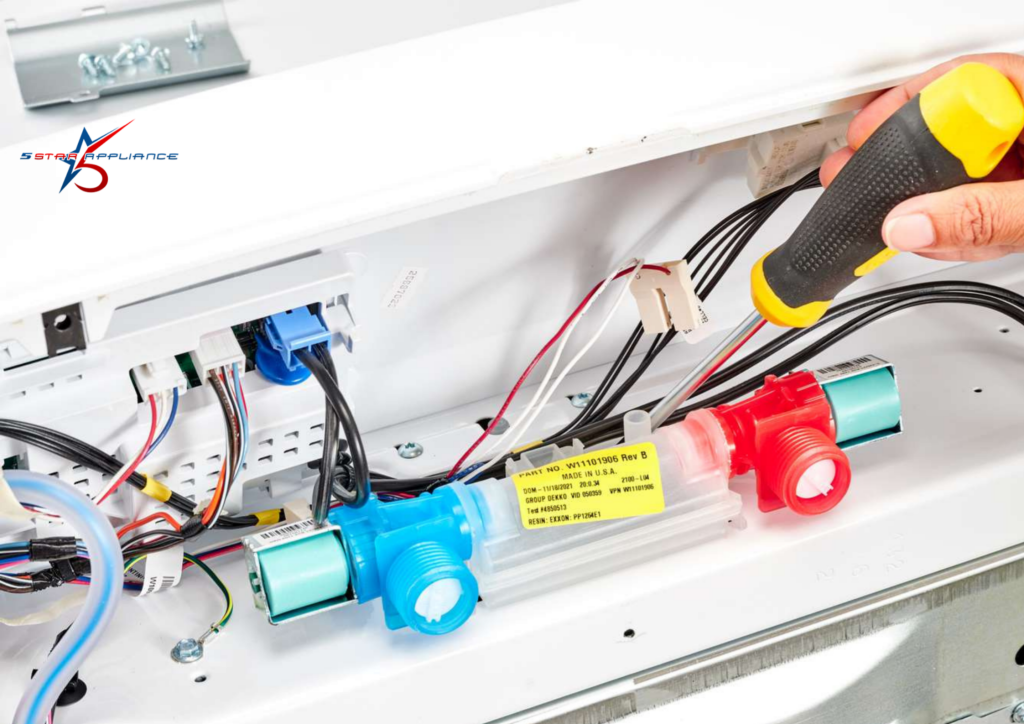
If your fridge has an ice maker or water dispenser, it connects to your home’s water supply via a plastic or copper supply line. A loose connection, small crack, or worn inlet valve can drip steadily behind or beneath the unit — often going unnoticed until the puddle becomes significant.
How to fix it: Unplug the fridge and turn off the water supply valve behind the unit. Pull the fridge forward and inspect the full length of the supply line for cracks, kinks, or moisture at the connection points. Tighten any loose fittings by hand. If the line itself is cracked, replace it — supply lines cost under $20 at any hardware store. A faulty inlet valve will need a technician to replace.
4. Damaged or dirty door gasket
The rubber seal running around your fridge and freezer doors — the gasket — keeps warm, humid air from entering the compartment. When it tears, stiffens, or accumulates grime, warm air gets inside. That warm air meets the cold interior and produces condensation, which eventually drips down and pools at the base of the unit.
How to fix it: Clean the gasket thoroughly with warm soapy water and a soft cloth. Check for tears, gaps, or sections that have pulled away from the door. A simple test: close the door on a piece of paper and pull. If the paper slides out easily, the seal is weak and the gasket needs replacing. Replacement gaskets are model-specific and available online for most brands.
5. Unlevel refrigerator
Your fridge is designed to sit very slightly tilted back — just enough for the doors to swing closed on their own and for defrost water to flow toward the drain. If the unit is level or tilted forward, water pools at the front rather than draining properly.
How to fix it: Place a level on top of the fridge side to side and front to back. Adjust the front leveling legs — usually accessible at the base of the unit without moving it — until the fridge has a very slight backward tilt. This takes five minutes and sometimes resolves a persistent leak entirely.
When the leak is not a DIY fix
Most refrigerator leaks are straightforward. But call a repair technician if you find:
- The drain pan keeps filling up within a day or two of emptying
- Water is coming from inside the fridge walls rather than underneath
- The ice maker line shows corrosion or the inlet valve is visibly damaged
- The leak reappears within a few days of clearing the defrost drain
These point to a defrost system failure or a component issue that requires professional diagnosis.
Conclusion
A leaking fridge feels like a big problem — but as you have seen, it rarely is. A clogged defrost drain, a cracked pan, a loose water line, a worn door seal, or an unlevel unit covers the vast majority of cases. Most homeowners resolve the issue in a single afternoon without spending a dollar on a service call.
Work through each cause in the order listed above. Start with the defrost drain — it is responsible for more refrigerator leaks than any other single cause. If that is not it, move to the drain pan, then the water line, then the gasket, then the leveling legs. You will find the source.
And if you do work through every fix and the leak persists, that is your signal to call a professional. Some problems — a failing defrost heater, a cracked evaporator pan hidden inside the walls, a malfunctioning inlet valve — genuinely require a technician. Knowing when to stop DIYing is just as valuable as knowing how to start.
Fix it today. The floor damage that comes from leaving it another week is always more expensive than the repair itself.