
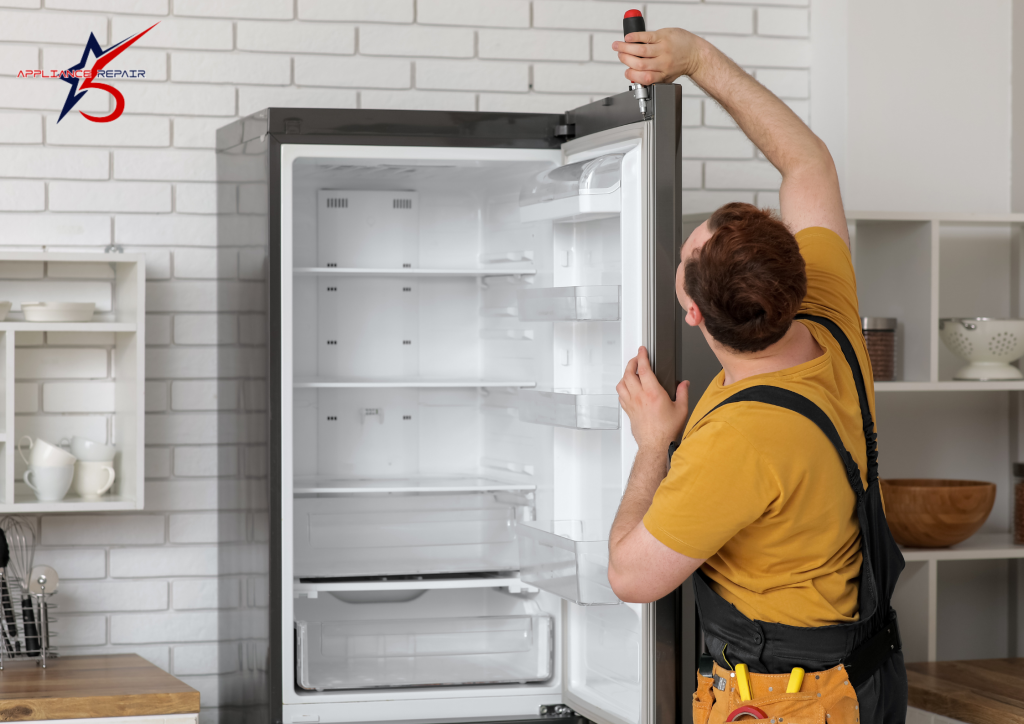
If your refrigerator is making a loud noise, you are probably wondering whether it is something to worry about or just part of normal operation. The answer depends entirely on the type of sound you are hearing. Refrigerators have many internal components — including motors, fans, and valves — and each one produces its own distinct sound during normal operation.
In this guide, we will walk you through every common refrigerator noise, explain exactly what is causing it, and tell you which sounds are completely normal and which ones you should investigate. This applies to most top freezer, bottom freezer, and side-by-side refrigerators.
Fan Noises — Humming Inside the Freezer or Behind the Fridge
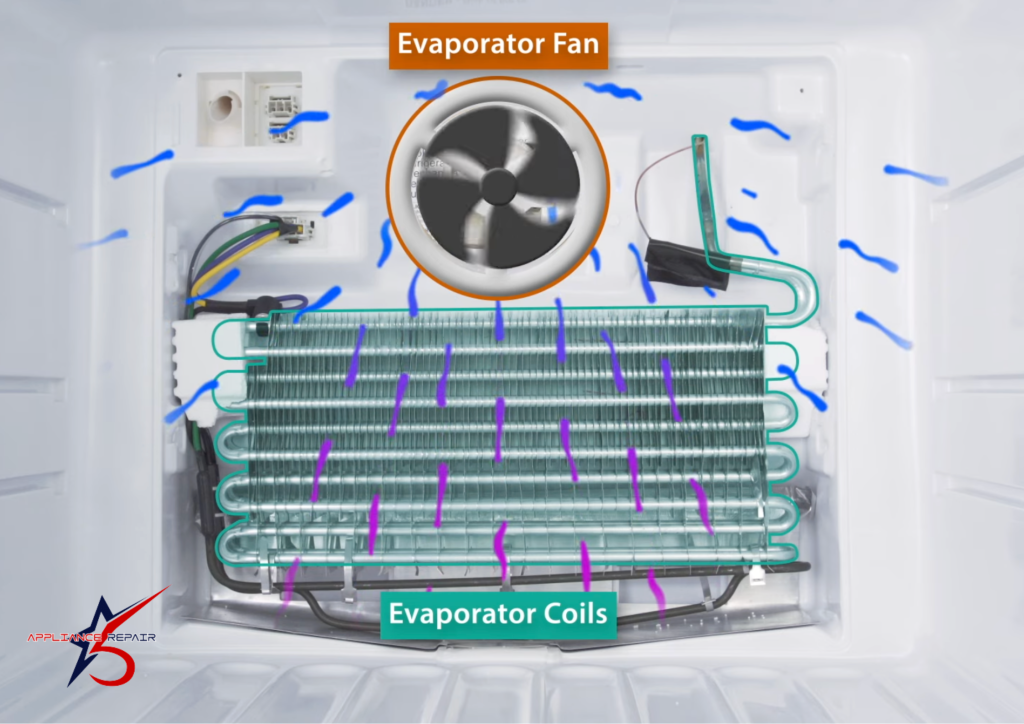
During the cooling cycle, the compressor pushes refrigerant through the system to keep your food cold. As it does this, two fans run to circulate air. When you open the freezer door, you will hear the evaporator fan running — this fan circulates air over the evaporator coils inside the freezer. You may also hear the condenser fan, which is located behind the refrigerator and pushes air over the condenser coils to release heat.
Both of these fans are usually pretty quiet and only run some of the time — so hearing a steady, quiet hum from either location is completely normal.
When to investigate: If either fan starts making a squealing or grinding sound, this is a sign that the motor bearings have worn out and the fan motor needs to be replaced. Do not ignore this sound — a failed fan motor will eventually cause your refrigerator to stop cooling properly.
Compressor Hum — The Most Common Refrigerator Sound
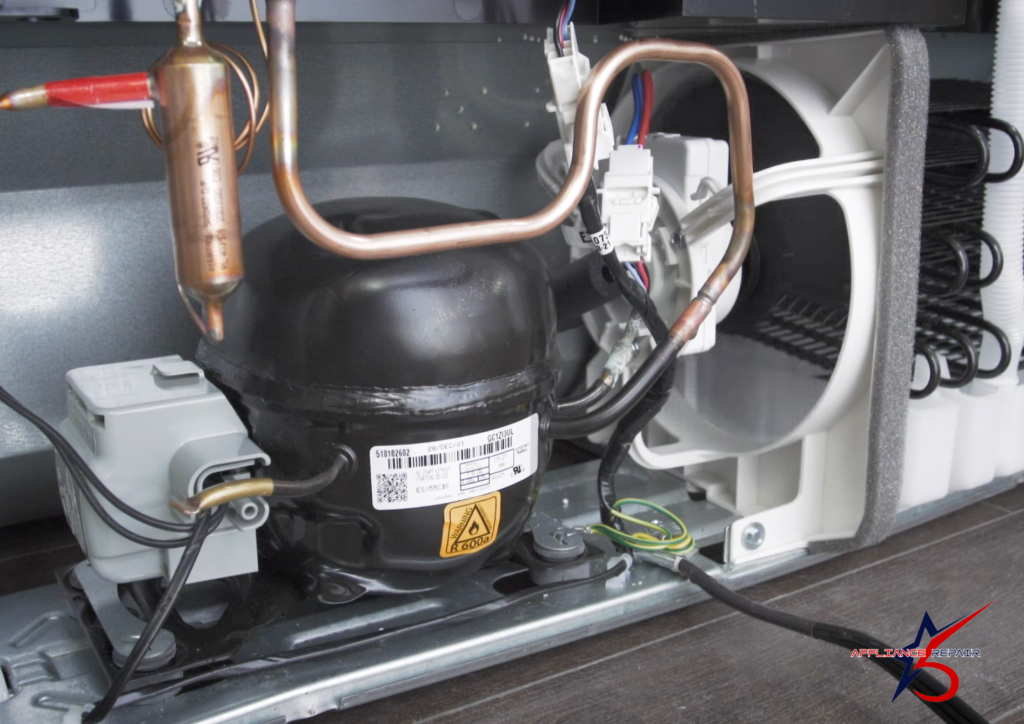
When the compressor runs, you will hear a distinct hum coming from behind the refrigerator. The compressor is responsible for pushing refrigerant through the entire system and is the main engine of your appliance. It cycles on and off throughout the day as needed, so it will not be running all the time. A steady hum from the back of the fridge is completely normal.
When to investigate: If your refrigerator is not cooling properly, the compressor will run more frequently than usual as it tries to reach the correct temperature. If you notice the hum is almost constant and your food is not staying cold, something in the system needs attention.
Clicking Sounds — Normal Startup Noise
It is completely normal to hear a click every once in a while coming from your refrigerator. There are two common sources. First, when the compressor starts up, you may hear a click from the start relay — a small component that helps the compressor kick on. Second, if your refrigerator has a water dispenser, you will hear a click every time you press the dispenser button as the solenoid energizes and the water valve opens. Both of these clicking sounds are normal parts of everyday refrigerator operation.
When to investigate: If your water dispenser is clicking but not dispensing water, the water valve or solenoid may need to be repaired or replaced.
Ice Maker Sounds — Faint Ticking Is Normal
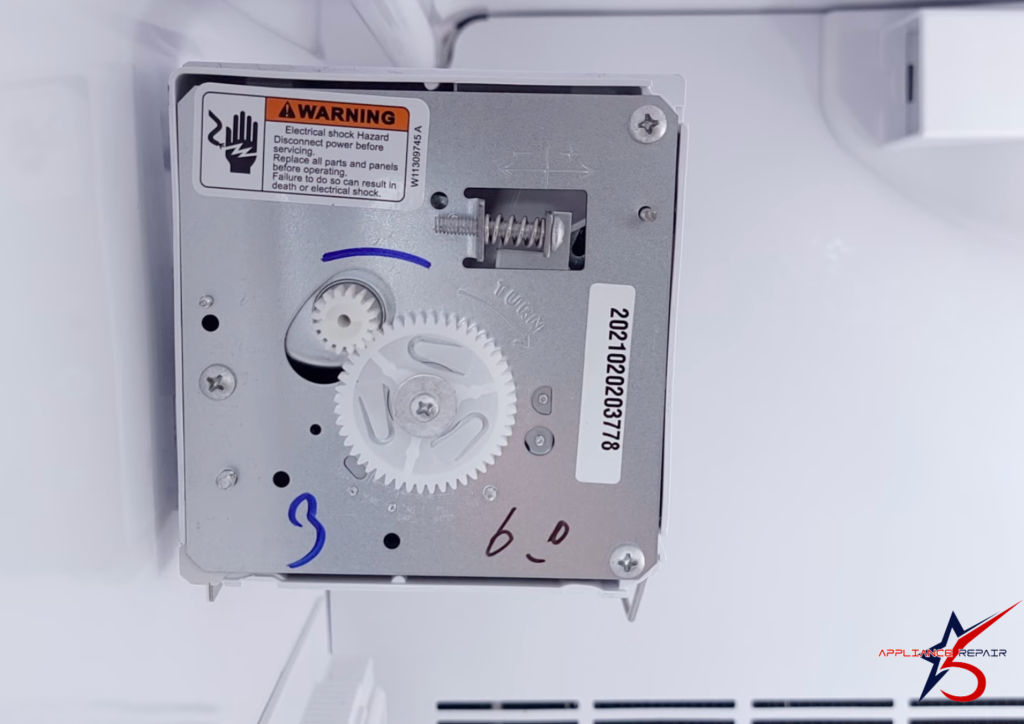
If you notice a faint ticking sound coming from the freezer, it is most likely your ice maker at work. The ice maker has a timed motor that slowly rotates through each stage of its cycle as it produces ice. This ticking sound is a normal part of ice maker operation and not a cause for concern.
When to investigate: If you are having problems with your ice maker — such as it not producing ice or making louder than usual sounds — the motor, water inlet valve, or temperature sensor may need to be inspected.
Defrost Sounds — Sizzling and Popping From the Freezer
If you hear a sizzling or popping sound coming from the freezer, this is the sound of ice melting during the automatic defrost cycle — and it is completely normal. Here is what is happening: over time, moisture from the air freezes onto the evaporator coils inside the freezer. Periodically, the refrigerator shuts off the compressor and turns on a heating element to melt that built-up ice. As the ice melts and drips, it creates the sizzling and popping sounds you hear. This process should last only about 30 minutes before stopping on its own.
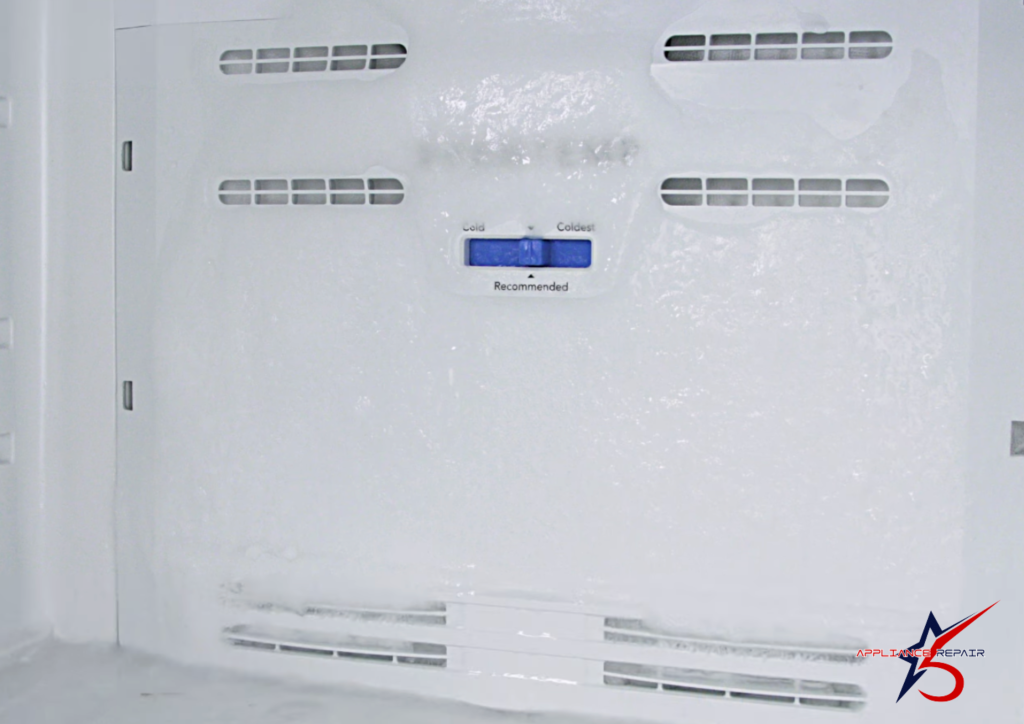
When to investigate: If the defrost cycle is not working properly, ice will continue to build up on the evaporator coils without ever melting. Over time this blocks airflow completely and the refrigerator will stop cooling. Signs of a defrost problem include heavy frost buildup inside the freezer and food not staying cold even though the compressor is running.
Quick Reference: Normal Sounds vs. Warning Sounds
Normal sounds:
- Steady quiet hum from fans inside the freezer or behind the fridge
- Hum from the compressor cycling on and off
- Occasional clicking when the compressor starts or the water dispenser is used
- Faint ticking from the ice maker
- Sizzling or popping during the defrost cycle lasting about 30 minutes
Sounds to investigate:
- Squealing or grinding from the fans — worn motor bearings
- Compressor humming constantly with poor cooling — system issue
- Water dispenser clicking but not working — faulty water valve
- Ice maker making noise but not producing ice — component failure
- Frost buildup in the freezer with poor cooling — defrost system failure
The Sounds You Should Never Ignore
To make it simple — here are the refrigerator noises that should prompt you to pick up the phone immediately:
- Squealing or grinding — fan motor is failing
- Constant humming that never stops — compressor is overworking
- Rapid clicking from the compressor area — start relay has failed
- Ice maker noise with no ice production — component failure
- Heavy frost in the freezer with poor cooling — defrost system failure
- Loud banging or knocking — something has come loose internally
FAQs
Why did my refrigerator suddenly start making a loud noise?
A sudden new noise almost always means something has changed inside the appliance — a fan motor beginning to fail, a start relay going bad, or the compressor working harder than it should. Sudden noises should always be investigated promptly. The earlier you catch the problem, the cheaper the fix.
Can I still use my refrigerator if it is making a loud noise?
It depends on the sound. Normal sounds like compressor hum, defrost sizzling, and ice maker ticking are fine. But if you are hearing squealing, grinding, or the compressor running non-stop, continuing to use the refrigerator risks making the problem worse and potentially losing everything inside it to spoilage.
How much does it cost to repair a noisy refrigerator?
Most common refrigerator repairs — fan motor replacement, start relay, defrost components — range from $100 to $300 including parts and labor. Catching the problem early almost always means a smaller bill. Waiting until a component fails completely can push costs to $400 or more, and in some cases may make replacement the smarter financial decision.
My refrigerator is making noise but still cooling fine — should I still worry?
Yes. Many refrigerator problems start with unusual sounds long before cooling is affected. A fan motor that is squealing today will fail in days or weeks — and when it does, cooling stops immediately. Do not wait for your food to start spoiling before you act.
How long should a refrigerator last?
A well-maintained refrigerator typically lasts 10 to 15 years. If your refrigerator is under 10 years old and making unusual noises, repair is almost always the right call. If it is over 12 years old and facing a major component failure, your technician can help you weigh repair versus replacement.